Blog

  • UEFA Champions League Matchday 7

    UEFA Champions League Matchday 7

    UEFA Champions League Matchday 7 preview with tactical analysis, key players, and what’s at stake across Europe’s premier club competition.

    of growing consequence. Matchday 7 of the 2025/26 season arrives at a moment where the margins are narrowing and the expanded league phase begins to reveal its true character. With just two rounds remaining, the balance between control and urgency will define how teams approach the midweek.

    January European nights rarely allow for romanticism. Squad rotation, physical management, and tactical restraint all come into play as domestic schedules intensify. Yet the Champions League demands clarity of purpose. For some clubs, this matchday represents an opportunity to secure a direct path to the Round of 16. For others, it is about survival — staying within reach of the knockout playoff positions before time runs out.


    Matchday 7

    This stage of the league phase is where strategy overtakes experimentation. Coaches are no longer gathering information — they are making decisions that could define their European season.


    Key Fixtures to Watch

    Not every match carries the same narrative weight, but several fixtures stand out for their stylistic contrast and competitive implications.

    FixtureDateEditorial Focus
    Real Madrid vs AS Monaco21 JanPositional control vs structural discipline
    Tottenham Hotspur vs Borussia Dortmund20 JanTempo, transitions, and midfield risk
    Sporting CP vs Paris Saint-Germain20 JanCompact defending against individual brilliance
    Bodø/Glimt vs Manchester City20 JanIntensity versus positional dominance

    Real Madrid’s home fixture against Monaco places emphasis on rhythm and patience. Madrid’s ability to manage space between the lines will be tested by a Monaco side comfortable defending in numbers and waiting for moments to counter.

    In North London, Tottenham and Borussia Dortmund meet in a game likely dictated by tempo. Spurs’ willingness to commit numbers forward contrasts with Dortmund’s transitional threat, making defensive balance a central tactical theme.


    Tactical Expectations Across the Matchday

    Matchday 7 is unlikely to produce reckless football. Instead, the prevailing tactical patterns suggest a round shaped by restraint, control, and selective aggression.

    Tactical ThemeWhat to Expect
    Possession ManagementFewer risks in buildup, longer circulation phases
    Transitional MomentsGames decided by isolated breaks, not volume
    Midfield CongestionSpace between the lines heavily contested
    Defensive CompactnessBlocks prioritized over sustained pressing

    Manchester City’s visit to Bodø/Glimt is emblematic of this contrast. The Norwegian side’s intensity and verticality will test City’s structure, but the visitors’ positional discipline is designed precisely for such environments. How long Bodø/Glimt can sustain pressure without exposing space will likely define the contest.


    What’s at Stake

    With only two matchdays remaining, the league table has become a live ecosystem rather than a static ranking.

    Clubs pushing for the top eight are now managing risk, aware that a single point could be enough to secure automatic qualification. Teams positioned between ninth and twenty-fourth face a different pressure — accumulation rather than perfection — knowing that consistency outweighs spectacle.

    For those near the bottom, the margin is unforgiving. Matchday 7 offers little room for narrative redemption; results must follow intent.


    Players Who Could Shape the Matchday

    While systems dominate outcomes at this stage, certain players retain the capacity to bend matches away from structure.

    PlayerClubInfluence
    Jude BellinghamReal MadridTempo control and late box presence
    Phil FodenManchester CitySpatial intelligence between lines
    Kylian MbappéParis Saint-GermainAbility to disrupt compact blocks
    Son Heung-minTottenham HotspurTransition threat and leadership

    These players are not relied upon for volume, but for moments — the subtle movement, the delayed run, the decisive action when space briefly appears.


    As Matchday 7 unfolds across Europe, the Champions League enters its most revealing phase. The noise fades, the margins tighten, and the competition begins to reward clarity over ambition. For clubs with genuine continental aspirations, this is the week where intent must translate into control — and where seasons quietly pivot toward success or disappointment.
  • Weekend in European Football: Five Matches That Will Shape the Season’s Momentum

    Weekend in European Football: Five Matches That Will Shape the Season’s Momentum


    As European leagues settle back into rhythm after the winter interlude, the weekend spanning January 16–19 presents more than just marquee fixtures. These matches offer tactical intrigue, psychological tests and subtle inflection points in the broader narrative of the season. Across England, Spain, France, Germany and Italy, clubs face moments that could quietly recalibrate their campaigns.

    Below, we break down the most compelling matches and what they reveal about each side’s current trajectory.


    Manchester United vs Manchester City — Premier League

    In Manchester, local pride collides with contrasting seasonal narratives. Pep Guardiola’s City approach this derby with the quiet authority of a title contender who know their blueprint inside out, while United’s resurgence still feels tentative — a blend of promise and inconsistency.

    Tactically this is intriguing: City are likely to dominate possession, probing United’s structure with their signature width and positional rotations, forcing Erik ten Hag’s men to defend deep and compact. United’s best hope lies in rapid vertical transitions and exploiting moments of disorganisation from a City side happy to cede tempo.

    In a derby that rarely conforms to logic, what matters most may not be the football itself but what each team gains in belief. For United it’s an opportunity to announce consistency; for City, a chance to underline their ascendancy.


    Paris Saint-Germain vs Lille — Ligue 1

    On paper, PSG’s clash with Lille might look routine, yet this fixture consistently provides more than a simple points exchange. Lille’s disciplined tactical structure makes them a historically uncomfortable opponent for PSG, particularly when the visitors rely on intensity and compactness over flair.

    PSG’s plan will almost certainly focus on wide play and stretching Lille’s lines, seeking to exploit space behind a disciplined back four. Lille’s objective is straightforward: remain narrow, congest the central corridors, and strike efficiently on the break.

    While the attention usually gravitates toward PSG’s attacking stars, the contest may be decided in the psychological subtleties — patience and controlled build-up versus frustration borne of a lack of clean openings.


    Real Sociedad vs Barcelona — LaLiga

    San Sebastián remains one of LaLiga’s most demanding away arenas, and Real Sociedad have built a reputation for turning their pitch into a battleground of rhythm rather than pure talent. Against Barcelona, Sociedad’s pressing structure and crowd energy often serve to unsettle even the most composed visitors.

    Barcelona’s tactical challenge will be to gain control through measured possession and intelligent progression, yet Sociedad’s aggressive midfield press threatens to disrupt that blueprint, forcing turnovers and triggering quick transitions.

    For Barcelona, this is more than a tactical puzzle — it’s a maturity test. How quickly they circulate the ball, maintain structure under pressure, and navigate Sociedad’s intensity could define not just the result, but their current identity on the road.


    Werder Bremen vs Eintracht Frankfurt — Bundesliga

    In Germany, Bremen and Frankfurt meet in a fixture that may not headline the weekend but carries genuine competitive intrigue. Both clubs occupy a middle ground where European aspirations and the spectre of inconsistency co-exist uneasily.

    Expect a relatively open game, with Bremen looking to control territory through proactive possession and Frankfurt comfortable absorbing pressure before launching incisive counterattacks. The duel on the flanks could be decisive, especially if Frankfurt unearth space in Bremen’s defensive transitions.

    This is the sort of contest that typifies the Bundesliga’s blend of intensity and unpredictability — a match where the scoreboard may not reveal the full tactical picture.


    Lazio vs Como — Serie A

    Italian football’s characteristic tension often reveals itself in matches like this. Lazio, in their pursuit of consistency, face a Como side determined to validate their place in Serie A.

    Lazio’s task is to dismantle a compact defensive block without abandoning balance — a familiar Serie A theme. Como, on the other hand, are likely to sit deep, absorb pressure, and hope to frustrate through organisation and resilience.

    This encounter may be decided not by spectacle but by patience, discipline and the ability to take advantage of moments when the opposition briefly breaks shape. Serie A’s subtleties are on full display here; the scoreboard may only tell part of the story.


    A Weekend of Subtle Turning Points

    This European weekend is defined not by glamor alone but by consequence. None of these matches will single-handedly decide titles, yet each carries the potential to influence momentum, expose tactical limits, and recalibrate confidence.

    Football rarely announces its turning points with fanfare. Sometimes, it lets them unfold quietly — in moments between whistles, across tense atmospheres, and in the tactical nuances that linger long after the final whistle.

  • Real Sociedad vs Barcelona: Sociedad Stun LaLiga Leaders 2–1

    Real Sociedad delivered a tactical masterclass to beat Barcelona 2–1 this Sunday.

    It was one of those nights at the Reale Arena where the elements, the occasion and sheer tactical discipline combined to produce a result that few neutrals will forget. On 18 January 2026, Real Sociedad welcomed Barcelona in a match that promised fireworks — and delivered them, but not in the way most expected. In front of a raucous Basque crowd on a damp Sunday evening, Sociedad claimed a 2–1 victory that sent shockwaves through LaLiga.

    Barcelona arrived on a remarkable run of form, buoyed by an 11-match winning streak across competitions, yet left San Sebastián with their confidence tested and their lead at the top trimmed to a slender margin. For Sociedad, it was a win born of intensity, purpose and an ability to exploit Barcelona’s rare vulnerabilities.

    Match Overview

    There’s an old football adage: dominating the ball doesn’t always mean dominating the game. Barcelona’s possession statistics — as usual — told one story; the final scoreline told another. From the first whistle, Sociedad pressed with intent, forcing Barcelona into hurried decisions and quick transitions. The hosts didn’t sit back; they carried real threat in transition and attacked the spaces that Barcelona’s high defensive line afforded.

    Mikel Oyarzabal opened the scoring in the 32nd minute with a superbly struck volley, a goal that owed as much to his movement as to Sociedad’s tactical bravery. Barcelona’s response did arrive — Marcus Rashford powered home a header in the 70th minute shortly after coming off the bench — but the momentum swung right back Sociedad’s way almost immediately. Gonçalo Guedes finished clinically in the 71st minute to restore the lead, catching Barcelona’s reset defence cold.

    Tactical Battle

    On paper, Barcelona’s shape — their fluid 4-3-3 hybrid with inverted full-backs and a midfield capable of both control and vertical progression — should have carved open Sociedad. But Imanol Alguacil’s side were meticulously prepared. They pressed strategically in blocks, forcing Barcelona wide and funneling play into predictable channels where the home side’s compact midblock could pounce.

    Barcelona’s wide threats, especially Lamine Yamal, caused moments of genuine danger, yet Sociedad’s defensive cohesion and goalkeeper Alex Remiro repeatedly denied them. Rémi’s performance was significant: several key saves and crucial positioning frustrated Barça’s array of shots and opportunities. As the match wore on, Barcelona’s numerical dominance became less threatening, in part because Sociedad’s transitions were quicker and more direct — a tactical nuance that paid dividends.

    Late tension peaked when Carlos Soler received a red card, reducing Sociedad to ten men. Rather than being instantly punished, Sociedad dug in deeper — a testament to their mental resilience and organisational discipline.

    League Implications

    This isn’t just a solitary upset. Barcelona’s lead at the summit of LaLiga has been significantly trimmed. While they remain at the top of the table, the margin is narrower than it was at kick-off, and the psychological impact of letting points slip after dominating territory and possession will linger. Sociedad, on the other hand, leapfrog a confidence barrier — reinforcing their tactical identity under pressure and showing they can beat one of Spain’s elite on their own terms.

    Standout Performances

    Oyarzabal, as captain and talisman, was more than just a goalscorer; his intelligent movement dragged defenders out of position and opened lanes for his teammates. Guedes’ quick reaction to level the contest after Barcelona’s equaliser spoke to Sociedad’s unshakeable belief on the night.

    For Barcelona, Rashford’s introduction sparked life, but it also underlined a pattern: too often reliant on individual moments rather than sustained collective pressure. Yamal’s flair was evident, but cutting through a disciplined, energetic Sociedad was a different proposition entirely.

    Even the coaching duel added intrigue. Hansi Flick, in his post-match comments, refused to focus on refereeing decisions and instead pointed to a performance that deserved better — a diplomatic line that nonetheless acknowledged Barcelona’s frustrations.

    The match was more than a result; it was a reminder that in LaLiga’s ever-tightening rhythm, tactical clarity and mental commitment can outweigh pure possession and star power. Sociedad’s win will be remembered not just for the scoreline, but for the way they earned it.


  • Manchester United vs Manchester City: United Clinch a Defining 2–0 Premier League Derby

    Manchester United vs Manchester City: United Clinch a Defining 2–0 Premier League Derby

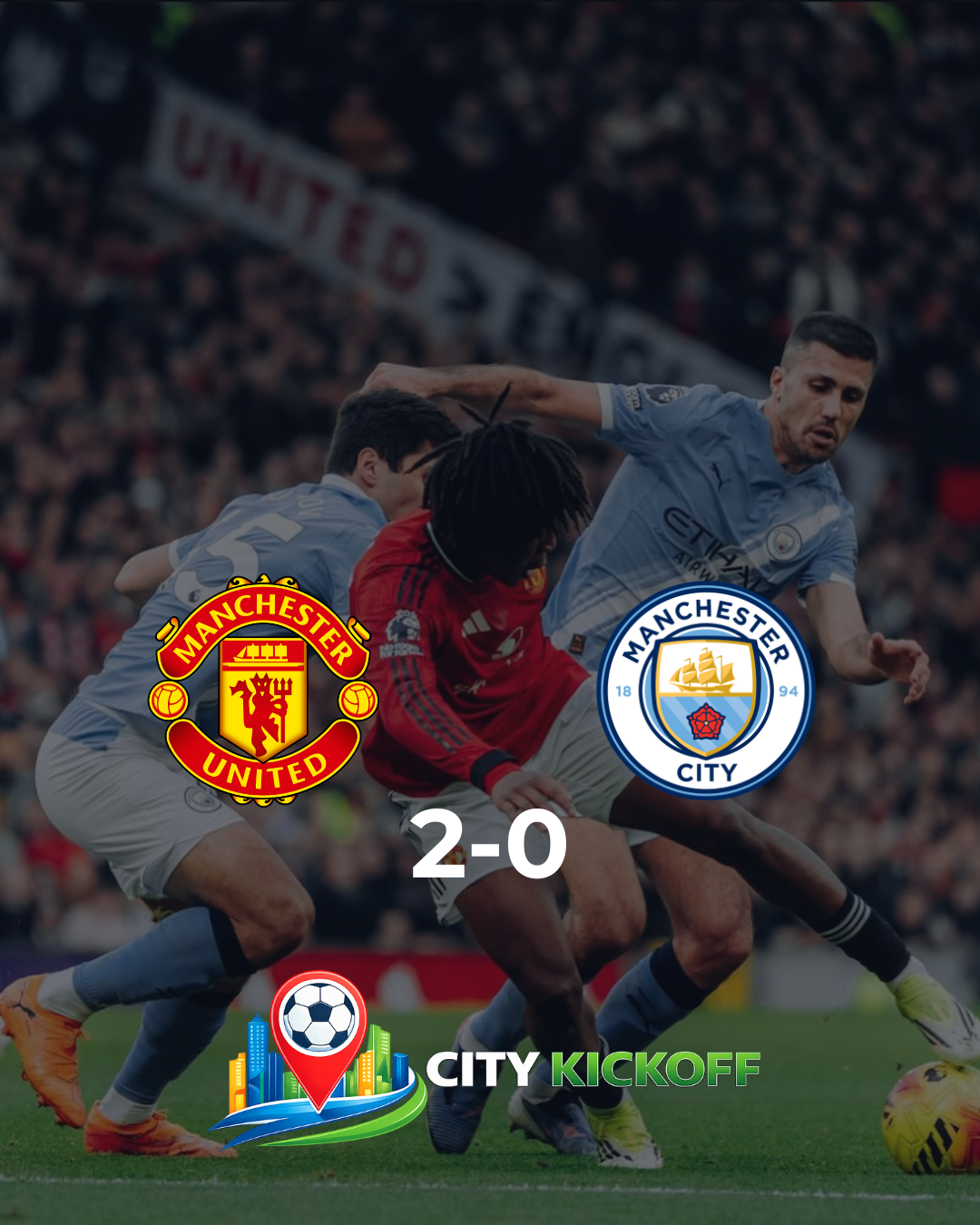
    Manchester United stunned Manchester City in the Premier League , winning 2–0 at Old Trafford in a tactically compelling derby.

    The sun dipped behind Old Trafford on 17 January 2026 as Manchester’s most enduring rivalry took centre stage. For a club whose season had been a patchwork of inconsistency, Manchester United produced one of their most meaningful performances of the 2025–26 Premier League campaign to date. Opposite them stood Manchester City, holders of continental aspirations and league momentum, but on this afternoon it was United who carried the narrative.

    In a match long anticipated, tactical intrigue and derby intensity collided — and by full-time the roar from the Stretford End was not just about goals, but belief. By beating their neighbours 2–0, United delivered a result that felt both rare and significant in a campaign defined by transitions.

    A Derby Defined by Purpose and Precision

    From the outset the stakes were clear: United needed a statement, City sought to reaffirm their title credentials. Pep Guardiola’s side controlled the ball with a clinical 68 % possession, probing for openings with their customary incisiveness. Yet such control rarely translated into clear danger. Instead, it was United — disciplined, direct and unyielding — who found the margins that matter most in derby football.

    When Bryan Mbeumo broke the deadlock in the 65th minute it was more than a goal — it was United’s tactical masterstroke realized. A quick transition, engineered by Bruno Fernandes’ arresting vision, exploited the spaces vacated by a City midfield that had been overrun. United’s counter-attack was swift, purposeful and ruthless: Mbeumo composed himself to slot beyond the outstretched glove of Donnarumma with all the calm of a striker who knows this moment matters.

    The second, delivered by Patrick Dorgu in the 76th minute, wasn’t merely a cushion — it was tactical vindication. City’s high line invited pressure, United’s wide play stretched the pitch, and Dorgu’s finish from Matheus Cunha’s neat service showcased United’s clinical instincts.

    Tactical Undercurrents: Structure Over Sentiment

    United’s set-up under interim manager Michael Carrick strayed from sentimental loyalty and embraced pragmatic efficiency. Lining up in a structured 4-2-3-1, they oscillated between compact defending and explosive forward bursts. Casemiro and Mainoo anchored the midfield with disciplined positioning, freeing Fernandes to orchestrate with both urgency and creativity. When City pressed high, United’s pivot moved the ball with decisive clarity — a nuance that defined their attacking identity.

    City, by contrast, suffered from an all-too familiar Premier League challenge: possession without penetration. Their 4-1-4-1 shape controlled territory but not tempo, and Erling Haaland — an ever-present threat — was shackled by United’s disciplined back line and a central midfield that denied him the service he thrives on. Despite dominating the ball, their attacking transitions lacked the incisive edge required to pierce this resolute United side.

    Moments that Tilted the Balance

    Two events encapsulated the derby’s arc. First, the offside-ruled goal for United in the first half — a strike from Bruno Fernandes that would have altered early momentum — reminded both sides how fine derby margins can be. Second was Diogo Dalot’s reckless challenge on Jérémy Doku, which many argued merited a red card but remained a yellow after VAR review. These flashpoints underscored the derby’s defining trait: emotion and impact in equal measure.

    What This Result Means

    This wasn’t merely a derby victory; it was a Premier League statement. For United, coming from a season of turbulence and managerial change, a home win against their most bitter rivals provides a psychological boost that transcends three points. For City, the result serves as a tactical probe that exposed vulnerabilities: dominance of possession is not dominance of narrative.

    United’s climb up the table gains renewed purpose. City’s pursuit of silverware, by contrast, is momentarily reframed: excellence in performance must translate into ruthlessness in result.

    In the theatre of English football, this derby will be remembered as the day United combined intent with execution — a result that reverberates not for what it was on paper, but for what it meant on the pitch.

  • Can’t-Miss European Matches This Weekend

    Can’t-Miss European Matches This Weekend

    The European football weekend stretching from January 16 to January 19 feels like one of those decisive moments where the season quietly shifts gear. With leagues settling into their rhythm after the winter break, this round of fixtures offers something deeper than spectacle: context, pressure, and subtle turning points.

    From domestic rivalries to clashes that test ambition, here are the matches that define the weekend.


    Manchester United vs Manchester City — Premier League

    The Manchester derby always arrives carrying more than just local pride, but this one feels particularly loaded. United are still searching for consistency, while City approach the second half of the season with the quiet authority of a team that knows exactly who they are.

    Tactically, this is a study in control versus chaos. City will dominate possession, stretching the pitch and testing United’s defensive discipline. United’s hope lies in transition — quick vertical attacks and moments of individual inspiration. The midfield duel between City’s positional intelligence and United’s physicality could dictate the tempo.

    Derbies rarely follow logic, but this one feels like a referendum on where both clubs truly stand.


    Paris Saint-Germain vs Lille — Ligue 1

    At first glance, this might look like a routine Ligue 1 fixture. It rarely is. Lille’s tactical discipline has long made them uncomfortable opponents for PSG, especially in matches where intensity outweighs flair.

    PSG will push the game wide and look to stretch Lille’s compact shape, while Lille’s aim is to stay narrow, deny space between the lines, and strike on the break. The spotlight naturally falls on PSG’s attacking stars, but the real battle may be psychological: patience versus frustration.

    If Lille survive the opening phases, this could become far more tense than expected.


    Real Sociedad vs Barcelona — LaLiga

    San Sebastián has a habit of exposing visiting giants, and Barcelona arrive knowing that this is one of LaLiga’s most unforgiving away trips. Real Sociedad’s structure, pressing, and crowd energy often turn matches into battles of rhythm rather than talent.

    Barcelona will look to impose control through possession, but Sociedad’s aggressive midfield press could disrupt their buildup. The key lies in how quickly Barça move the ball through central areas and whether Sociedad can force turnovers high up the pitch.

    This feels like a match where Barcelona’s maturity — or lack of it — will be tested.


    Werder Bremen vs Eintracht Frankfurt — Bundesliga

    The Bundesliga returns with a fixture that may not dominate headlines but offers genuine intrigue. Bremen and Frankfurt both live in that competitive middle ground where European aspirations and relegation fears are never too far apart.

    Expect an open game. Bremen will try to control territory, while Frankfurt are comfortable playing without the ball and attacking space quickly. The duel on the flanks could be decisive, especially if Frankfurt find room to exploit Bremen’s defensive transitions.

    This is the kind of Bundesliga match that often surprises with its intensity.


    Lazio vs Como — Serie A

    Serie A weekends often save their tension for the finer details, and this match is no exception. Lazio, chasing consistency, face a Como side eager to prove they belong at this level.

    Lazio’s challenge is breaking down a compact block without losing defensive balance. Como will likely sit deep, absorb pressure, and hope to frustrate. Individual quality may be the difference, but patience will be just as important.

    This is a match where the scoreboard might not tell the full story.


    Awesome Weekend

    This weekend across Europe is not defined by glamour alone, but by consequence. These matches won’t decide titles on their own, yet they shape belief, expose weaknesses, and subtly redraw the map of the season.

    Football rarely announces its turning points loudly. Sometimes, it lets them unfold quietly — between January nights, tense atmospheres, and moments that linger longer than the result itself.

  • Racing Santander 0 – 2 Barcelona: Copa del Rey Barcelona Advance to Quarter-Finals

    Barcelona edged Racing Santander 2–0 in the Copa del Rey Round of 16, with Torres and Yamal sealing a hard-fought win at El Sardinero.

    On a blustery night at El Sardinero, Racing Santander’s spirited Copa del Rey bid was halted by a seasoned Barcelona side on 15 January 2026, as the Catalans edged a tense 2–0 victory to reach the quarter-finals of the Copa del Rey. Away from the glamour of La Liga clashes, cup nights like these are where narratives of grit and tactical nuance take centre stage — and this tie delivered both.

    For the home side, top of Spain’s Segunda División and buoyed by a vociferous crowd, this was an opportunity to topple one of the country’s giants and write their own cup story. Barcelona, defending champions and fresh from Supercopa success, arrived with far more pedigree but still respect for the challenge posed by José Alberto López’s men.

    A Tight Opening, Barcelona Quality Decisive

    The early exchanges were cautious, with Racing’s game-plan evident from the first whistle: press aggressively, deny space between the lines, and hit Barcelona on the break. They executed it well. Barca had the lion’s share of possession, as expected against a second-tier outfit, but quality opportunities were rarer than the scoreboard suggested.

    Marcus Rashford flitted in and out of the contest, his pace a constant threat, and early crosses tested Racing’s organisation — but acute finishing was elusive. Racing’s back line, disciplined and courageous, repelled wave after wave until half-time with the tie still balanced.

    Barcelona’s breakthrough arrived shortly after the hour mark, not through sustained dominance but a moment of incisive attacking play. Ferran Torres, knowing his way around tightly packed defences, peeled off his marker to latch onto a threaded pass from Fermín López, rounded the goalkeeper and finished clinically in the 66th minute.

    Tactical Resilience vs Cup Intensity

    Racing’s shape — typically a 4-3-3 compact in midfield — forced Barcelona into wider channels and quick switches of play, something that premiered incisive full-back combinations. Yet, even with territorial control, Barca’s quality at the final third was tested by Racing’s energy and focus. On several occasions, Racing threatened to level, with their runners exploiting transitional spaces that Barcelona permitted in their desire to create forward momentum.

    Joan García in the Barcelona goal emerged as an unlikely linchpin in the latter stages, producing a series of decisive saves to deny Racing’s late surges. One such intervention in stoppage time preserved Barca’s lead and directly led to the Catalans’ second goal.

    Yamal’s Late Seal and Barcelona’s Grit

    Cup ties often pivot on belief as much as ability, and in added time, teenage prodigy Lamine Yamal capped Barcelona’s progress by tapping home a chance created through quick transition. It was a reminder that even in matches where they don’t utterly dominate, Barcelona’s squad depth and technical quality at key moments remains a cut above.

    For Racing, the margins were minuscule — two goals ruled out for offside, and a handful of promising counters that failed to find their final pass. In cup football, those tiny details are the difference between a historic upset and a valiant exit.

    Final Whistle: Significance and Context

    Barcelona’s advancement to the quarter-finals extends an impressive run in the 2025–26 Copa del Rey, but the manner in which they had to grind out this result against a lower-division side underscores the unpredictable demand of knockout football. For Racing Santander, it serves as both a statement of intent and a reminder that tactical organisation and belief can stretch even elite opponents.

    On nights like this, the romance of the cup — the tactical chess, the emotional ebb and flow — shines brightest. Barcelona may have progressed, but Racing’s performance will linger in the minds of many who relish the stories beyond the scoreline.

  • Como vs Milan: Serie A Thriller Sees Milan Rally for a 3–1 Win

    Milan staged a tactical comeback to beat Como 3–1, with Rabiot starring and key implications for the title race.

    The mid-January chill along the shores of Lago di Como gave way to a night of intense Serie A drama on 15 January 2026, when Como hosted AC Milan at the Stadio Giuseppe Sinigaglia. What began as a tricky test for the Rossoneri quickly unfolded into a narrative familiar to fans of tactical patience: Milan’s experience ultimately outgunned Como’s spirited challenge to claim a 3–1 victory and assert their title credentials.

    From the first whistle, this was more than a routine league fixture. Milan, sitting near the summit and chasing leaders Inter, needed the points to stay in the title conversation, while Como — buoyed by their surprisingly strong league position — saw the clash as an opportunity to prove they belong in Italy’s top tier beyond mere survival.

    Como’s Early Spark and Milan’s Response

    Como’s intention was clear from the outset: disrupt Milan’s rhythm with compact pressing and quick transitions. That plan bore fruit early when Marc-Oliver Kempf rose to meet a set-piece and put the hosts ahead in the 10th minute, a goal that briefly silenced the traveling contingent and set the tone for an unexpectedly open contest.

    Milan’s response was methodical rather than frantic. With possession statistics skewed in Milan’s favour yet lacking penetration in the final third, it was a moment of individual precision that delivered the equaliser just before the break. Christopher Nkunku converted a penalty at 45+1’ — a reward for persistence after Kempf fouled Adrien Rabiot inside the box.

    Tactical Pivot and Rossoneri Control

    The second half saw Milan adjust subtly — a shift toward diagonal ball progression and quick overloads in wide channels that stretched Como’s midfield block. Rabiot, increasingly influential between the lines, finished a composed Milan move in the 55th minute to put the visitors in front.

    As Como’s energy dipped, Milan’s tactical discipline grew. The deployment of a rigid 3-5-2 shape — symptomatic of Massimiliano Allegri’s pragmatism this season — ensured that when possession was turned over, the transitions were dangerous and orchestrated. Rabiot’s second, a low-driven strike in the 88th minute, was as much a statement of control as it was a match-sealing finish.

    Standout Performances

    Milan’s resilience hinged on Adrien Rabiot’s commanding presence in midfield — driving forward, shielding the defence, and ultimately delivering goals that swung the result. Mike Maignan also played a crucial role, his early saves keeping Milan in the game before their tactical ascendancy fully manifested.

    For Como, Kempf’s early header and rearguard work reflected tactical discipline and attacking intent from set pieces. Their high-energy phases suggested a side capable of competing physically in Serie A, even if the tactical sophistication of Milan proved ultimately decisive.

    What This Result Means

    Milan’s victory — achieved in a manner that balanced patience with tactical flexibility — keeps them firmly in the Serie A title hunt, remaining close to the leaders and underlining their credentials as genuine contenders. For Como, the performance reinforces their status as one of the league’s more intriguing mid-table outfits, capable of pushing established sides hard, but still needing consistency to convert promise into tangible progression.

    In a season where margins at the top are razor-thin, this game was a reminder that experience, tactical adaptation, and moments of individual brilliance often decide the tightest of contests in Serie A. As the winter break gives way to the run-in, both teams carry distinct lessons from this compelling encounter.

  • Albacete vs Real Madrid: Copa del Rey Shock Ends in 3–2 Miracle for the Underdogs

    Albacete stunned Real Madrid 3–2 in the Copa del Rey, delivering a historic upset as Jefté Betancor’s late winner sealed the giant-killing.

    On a cold January night at the Estadio Carlos Belmonte, the Copa del Rey reminded Spanish football why it remains a competition where hierarchy can dissolve in ninety minutes. Albacete, fighting their own battles far from the spotlight, produced a performance driven by conviction and clarity to eliminate Real Madrid in a pulsating 3–2 contest.

    For Madrid, the match carried added significance. It marked Álvaro Arbeloa’s first competitive outing on the touchline, a debut meant to offer stability and authority. Instead, it became a harsh introduction to the unforgiving nature of knockout football, where control means little without precision and ruthlessness.

    Match Overview

    This Round of 16 tie unfolded with an intensity that belied the gap between the two sides on paper. Albacete approached the game with discipline and belief, while Real Madrid rotated but still fielded enough quality to expect progression. By the final whistle, the scoreboard told a story few anticipated: Albacete 3, Real Madrid 2.

    How the Match Turned

    Albacete’s opening goal arrived as a reward for their aggression. A well-delivered corner was met decisively, and the hosts carried their lead into halftime with momentum on their side. Madrid equalised just before the break, capitalising on a loose ball in the box, a moment that should have tilted the tie back toward the favourites.

    Instead, the second half became increasingly uncomfortable for the visitors. Albacete defended compactly, closed passing lanes through midfield, and waited patiently for moments to strike. When the second goal arrived late on, it felt earned — the result of sustained pressure rather than fortune.

    Madrid responded in stoppage time, forcing a 2–2 equaliser that seemed to push the tie toward extra time. But the night still had one final twist.

    Tactical Reading of the Upset

    From a tactical standpoint, Albacete’s success lay in their structure. They denied Madrid central progression, forced play wide, and were aggressive on second balls. Their transitions were direct and purposeful, refusing to waste possession once space appeared.

    Real Madrid, by contrast, struggled to establish rhythm. Ball circulation was slow, spacing between lines inconsistent, and the lack of coordinated pressing allowed Albacete to reset repeatedly. Individual quality surfaced in flashes, but never long enough to assert dominance.

    The Decisive Moment

    Deep into added time, Albacete struck again. A long ball exposed Madrid’s defensive line, and the finish was composed, ruthless, and symbolic of the hosts’ belief. The stadium erupted as the goal confirmed one of the competition’s most memorable eliminations.

    There was no time for recovery, no margin left for correction. The whistle that followed sealed Madrid’s exit.

    What the Result Means

    For Albacete, this victory stands as a defining moment of the season — proof that organisation and courage can overcome status. It injects confidence into their broader campaign and reinforces the club’s identity as a side capable of rising to extraordinary occasions.

    For Real Madrid, the elimination raises immediate questions. Early exits are never taken lightly, and this one underscores the challenges of transition, particularly in high-pressure knockout settings.

    The Copa del Rey once again delivered its timeless lesson: reputation does not play the match. On this night in Albacete, belief did — and it was enough.

  • Inter vs Lecce: A Hard-Fought 1–0 Serie A Win to Stretch the Title Lead

    The mid-winter afternoon at the San Siro felt like a microcosm of Inter’s season — controlled, occasionally frustrating, but ultimately efficient. Against a resilient Lecce side anchored deep in the relegation battle, Inter’s relentless positional pressure finally yielded breakthrough late in the second half. It was a narrow 1–0 victory, a scoreline that flatters Inter’s territorial dominance yet tells a story of stubborn resistance from the visitors.

    For Inter, leading the Serie A race and seeking to widen the gap at the summit, this fixture was more than just three points — it tested their ability to break down teams willing to defend in numbers and smother space behind the ball. Lecce, clinging three points above the relegation zone, backed their reputation as a tough out with disciplined structure and intensity that rarely allowed the Nerazzurri to settle.

    Match Review

    The game evolved much as predicted: Inter dominated possession and territorial progression, while Lecce sat deep in a compact block, inviting their hosts to probe wide areas before sliding across to funnel play back into congested central channels. It was a battle not of open flair, but of patience and precision.

    Inter’s early forays showcased their typical rhythm — full-backs pushing high, midfield triangles cycling the ball with calm — but Lecce’s midfield triad consistently won the first contact and reset lines with smart interceptions. For long spells, Inter’s attacks looked promising on paper but lacked the final-third incision to unlock Lecce’s stubborn low block.

    Key Moment: The Breakthrough

    What ultimately decided the contest was not a tactical masterstroke nor a moment of sheer individual brilliance, but a well-timed piece of opportunism by substitute Francesco Pio Esposito. Introduced to inject fresh legs and creativity, Esposito seized upon a loose ball in the box around the 78th minute, reacting quickest after a Lautaro Martínez effort was parried only half-away. The young attacker’s first-time finish was emphatic — a clinical end to long periods of constructive dominance.

    Up until that point, Inter’s offense had been methodical but blunt. Ange-Yoan Bonny’s early drive was kept out, a potential penalty call for Inter was overturned on VAR, and Lecce goalkeeper Wladimiro Falcone stood tall with a series of gutsy stops to keep the visitors in the game.

    Tactical Analysis

    Inter’s formation — a flexible back three sliding into 3-5-2 in possession — aimed to overload Lecce’s flanks, but Lecce’s disciplined shifting meant that moments of numerical advantage were often neutralized before they became truly dangerous. The Nerazzurri midfield, led by Nicolò Barella in rotation with Piotr Zielinski, controlled the ball but struggled to execute forward passes that beat lines with regularity.

    Lecce’s approach was textbook opportunistic defending: narrow block, disciplined lines, and quick transitions when possession was regained. They conceded possession willingly in non-threatening areas and made Inter work for every progressive pass. While their offensive threat was minimal — a single recorded shot on goal all night apart from the winner — their defensive cohesion was laudable given the discrepancy in league quality and resources.

    Whith this

    In the broader context of the Serie A season, Inter’s win was far from routine. By converting pressure into points even on nights when the breakthrough is elusive, Simone Inzaghi’s side showcased the kind of grit that separates title contenders from also-rans. Extending their lead at the top by taking full advantage of the slip-ups around them was as much a tactical win as it was a psychological one, reaffirming their ability to grind out results under duress.

    For Lecce, the narrow defeat shouldn’t erase the positives. In an unforgiving run of fixtures, enforcing structural discipline against a title-chasing outfit will be remembered as a performance of fight and cohesion — even if it ultimately fell short.

    When the final whistle blew, the headline number mattered: 1–0 to Inter. Yet beneath that simple scoreline lay a tactical tussle, a test of patience, and a reminder that even in campaigns defined by dominance, the subtleties of game management and moment-seizing often write the narrative.

  • Newcastle 0–2 Manchester City: City Take Control in Carabao Cup Semi-Final First Leg

    Manchester City edge Newcastle 2-0 in the first leg of the 2025/26 Carabao Cup semi-final at St. James’ Park, with Semenyo and Cherki on the scoresheet.

    It was a night at St. James’ Park that felt like a tug-of-war between pedigree and perseverance. On 13 January 2026, under the January chill and the weight of knockout football, Manchester City walked away with a slender but telling advantage over Newcastle United in the Carabao Cup 2025/26 semi-final first leg.

    For Newcastle, the occasion carried the expectation of a title defence and local pride. For City, it was another step toward a piece of silverware that has eluded them since 2021. In a tie that balanced on fine margins and contentious decisions, it was the visitors who ultimately drew first blood in what promises to be an engrossing two-legged battle.

    First Half: Cautious Chess on the Pitch

    From the outset, both sides approached the game with respect and calculation. Newcastle’s 4-3-3 sought to probe wide and draw City out of position, with Joelinton and Bruno Guimarães orchestrating the midfield’s rhythm. But Manchester City’s disciplined 4-1-4-1, anchored by their pivot and orchestrated through quick circulation, denied their hosts any meaningful continuity. Attempts from both sides in the opening 45 minutes were sporadic and lacked conviction, emblematic of two teams refusing to overcommit early in a tie so finely poised.

    Second Half Spark: Semenyo’s Breakthrough and VAR Drama

    The second half brought the decisive moment. Manchester City’s new recruit Antoine Semenyo — still embedding himself into Pep Guardiola’s system — found the opener on the hour mark, reacting quickest to a cross from Jeremy Doku to finish clinically. It was an incisive strike that rewarded City’s persistence and premiership-level sharpness.

    City might have doubled their lead soon after. Semenyo appeared to flick home his second, only for VAR to intervene after a lengthy review. The replay showed Erling Haaland fractionally offside and impeding a Newcastle defender — the decision coming after almost six minutes of deliberation. Within the ebb and flow of this semi-final, it was a flashpoint: not just a technical call, but a moment that reshaped the tactical balance.

    Newcastle pressed with urgency after the controversy, hitting the woodwork and forcing saves from City’s goalkeeper. Yet their final ball often lacked that cutting edge necessary to genuinely unbalance Guardiola’s structure.

    Cherki’s Late Touch Seals the Night

    Just when the tie threatened to simmer toward a tense close, Rayan Cherki delivered a late sucker-punch in added time. Collecting a loose ball from a wide phase of play, Cherki’s left-footed finish — smoothly taken and brutally effective — gave City a 2-0 cushion going into the second leg. Timing matters in two-legged affairs, and arriving right at the death, this goal underscored City’s patience and tactical control.

    Tactical Narrative: Control Through Structure

    City’s victory was built not on overwhelming dominance, but on granular superiority. In possession, their midfield rotations disrupted Newcastle’s pressing triggers. Out of possession, compact lines forced Newcastle into predictable channels, where City’s defenders were comfortable to engage. The balance of possession — slightly in City’s favour — reflected this controlled authority rather than flighty territorial advantage.

    Newcastle’s shape offered glimpses of attacking intent, but they routinely found themselves one pass away from danger. Their wingers stretched play well, yet without a reliable link between midfield and forward line, their influence diminished as the match wore on.

    What the Result Means

    A 2-0 away win in a semi-final first leg is more than a scoreline — it’s psychological currency. City now carry both an advantage and the strategic leverage to dictate the tie’s tempo back at the Etihad. For Newcastle, the task ahead is formidable: overturning a two-goal deficit against one of England’s most tactically coherent sides demands precision and resilience.

    City’s clinical edge and measured performance provide them with momentum — albeit hard earned — as they chase further honors this season.

    In a contest marked by fine margins and tactical nuance, it was Manchester City’s calculated execution under pressure that yielded the decisive blows on the night.