Category: News

  • Can’t-Miss European Matches This Weekend

    Can’t-Miss European Matches This Weekend

    The European football weekend stretching from January 16 to January 19 feels like one of those decisive moments where the season quietly shifts gear. With leagues settling into their rhythm after the winter break, this round of fixtures offers something deeper than spectacle: context, pressure, and subtle turning points.

    From domestic rivalries to clashes that test ambition, here are the matches that define the weekend.


    Manchester United vs Manchester City — Premier League

    The Manchester derby always arrives carrying more than just local pride, but this one feels particularly loaded. United are still searching for consistency, while City approach the second half of the season with the quiet authority of a team that knows exactly who they are.

    Tactically, this is a study in control versus chaos. City will dominate possession, stretching the pitch and testing United’s defensive discipline. United’s hope lies in transition — quick vertical attacks and moments of individual inspiration. The midfield duel between City’s positional intelligence and United’s physicality could dictate the tempo.

    Derbies rarely follow logic, but this one feels like a referendum on where both clubs truly stand.


    Paris Saint-Germain vs Lille — Ligue 1

    At first glance, this might look like a routine Ligue 1 fixture. It rarely is. Lille’s tactical discipline has long made them uncomfortable opponents for PSG, especially in matches where intensity outweighs flair.

    PSG will push the game wide and look to stretch Lille’s compact shape, while Lille’s aim is to stay narrow, deny space between the lines, and strike on the break. The spotlight naturally falls on PSG’s attacking stars, but the real battle may be psychological: patience versus frustration.

    If Lille survive the opening phases, this could become far more tense than expected.


    Real Sociedad vs Barcelona — LaLiga

    San Sebastián has a habit of exposing visiting giants, and Barcelona arrive knowing that this is one of LaLiga’s most unforgiving away trips. Real Sociedad’s structure, pressing, and crowd energy often turn matches into battles of rhythm rather than talent.

    Barcelona will look to impose control through possession, but Sociedad’s aggressive midfield press could disrupt their buildup. The key lies in how quickly Barça move the ball through central areas and whether Sociedad can force turnovers high up the pitch.

    This feels like a match where Barcelona’s maturity — or lack of it — will be tested.


    Werder Bremen vs Eintracht Frankfurt — Bundesliga

    The Bundesliga returns with a fixture that may not dominate headlines but offers genuine intrigue. Bremen and Frankfurt both live in that competitive middle ground where European aspirations and relegation fears are never too far apart.

    Expect an open game. Bremen will try to control territory, while Frankfurt are comfortable playing without the ball and attacking space quickly. The duel on the flanks could be decisive, especially if Frankfurt find room to exploit Bremen’s defensive transitions.

    This is the kind of Bundesliga match that often surprises with its intensity.


    Lazio vs Como — Serie A

    Serie A weekends often save their tension for the finer details, and this match is no exception. Lazio, chasing consistency, face a Como side eager to prove they belong at this level.

    Lazio’s challenge is breaking down a compact block without losing defensive balance. Como will likely sit deep, absorb pressure, and hope to frustrate. Individual quality may be the difference, but patience will be just as important.

    This is a match where the scoreboard might not tell the full story.


    Awesome Weekend

    This weekend across Europe is not defined by glamour alone, but by consequence. These matches won’t decide titles on their own, yet they shape belief, expose weaknesses, and subtly redraw the map of the season.

    Football rarely announces its turning points loudly. Sometimes, it lets them unfold quietly — between January nights, tense atmospheres, and moments that linger longer than the result itself.

  • Racing Santander 0 – 2 Barcelona: Copa del Rey Barcelona Advance to Quarter-Finals

    Barcelona edged Racing Santander 2–0 in the Copa del Rey Round of 16, with Torres and Yamal sealing a hard-fought win at El Sardinero.

    On a blustery night at El Sardinero, Racing Santander’s spirited Copa del Rey bid was halted by a seasoned Barcelona side on 15 January 2026, as the Catalans edged a tense 2–0 victory to reach the quarter-finals of the Copa del Rey. Away from the glamour of La Liga clashes, cup nights like these are where narratives of grit and tactical nuance take centre stage — and this tie delivered both.

    For the home side, top of Spain’s Segunda División and buoyed by a vociferous crowd, this was an opportunity to topple one of the country’s giants and write their own cup story. Barcelona, defending champions and fresh from Supercopa success, arrived with far more pedigree but still respect for the challenge posed by José Alberto López’s men.

    A Tight Opening, Barcelona Quality Decisive

    The early exchanges were cautious, with Racing’s game-plan evident from the first whistle: press aggressively, deny space between the lines, and hit Barcelona on the break. They executed it well. Barca had the lion’s share of possession, as expected against a second-tier outfit, but quality opportunities were rarer than the scoreboard suggested.

    Marcus Rashford flitted in and out of the contest, his pace a constant threat, and early crosses tested Racing’s organisation — but acute finishing was elusive. Racing’s back line, disciplined and courageous, repelled wave after wave until half-time with the tie still balanced.

    Barcelona’s breakthrough arrived shortly after the hour mark, not through sustained dominance but a moment of incisive attacking play. Ferran Torres, knowing his way around tightly packed defences, peeled off his marker to latch onto a threaded pass from Fermín López, rounded the goalkeeper and finished clinically in the 66th minute.

    Tactical Resilience vs Cup Intensity

    Racing’s shape — typically a 4-3-3 compact in midfield — forced Barcelona into wider channels and quick switches of play, something that premiered incisive full-back combinations. Yet, even with territorial control, Barca’s quality at the final third was tested by Racing’s energy and focus. On several occasions, Racing threatened to level, with their runners exploiting transitional spaces that Barcelona permitted in their desire to create forward momentum.

    Joan García in the Barcelona goal emerged as an unlikely linchpin in the latter stages, producing a series of decisive saves to deny Racing’s late surges. One such intervention in stoppage time preserved Barca’s lead and directly led to the Catalans’ second goal.

    Yamal’s Late Seal and Barcelona’s Grit

    Cup ties often pivot on belief as much as ability, and in added time, teenage prodigy Lamine Yamal capped Barcelona’s progress by tapping home a chance created through quick transition. It was a reminder that even in matches where they don’t utterly dominate, Barcelona’s squad depth and technical quality at key moments remains a cut above.

    For Racing, the margins were minuscule — two goals ruled out for offside, and a handful of promising counters that failed to find their final pass. In cup football, those tiny details are the difference between a historic upset and a valiant exit.

    Final Whistle: Significance and Context

    Barcelona’s advancement to the quarter-finals extends an impressive run in the 2025–26 Copa del Rey, but the manner in which they had to grind out this result against a lower-division side underscores the unpredictable demand of knockout football. For Racing Santander, it serves as both a statement of intent and a reminder that tactical organisation and belief can stretch even elite opponents.

    On nights like this, the romance of the cup — the tactical chess, the emotional ebb and flow — shines brightest. Barcelona may have progressed, but Racing’s performance will linger in the minds of many who relish the stories beyond the scoreline.

  • Albacete vs Real Madrid: Copa del Rey Shock Ends in 3–2 Miracle for the Underdogs

    Albacete stunned Real Madrid 3–2 in the Copa del Rey, delivering a historic upset as Jefté Betancor’s late winner sealed the giant-killing.

    On a cold January night at the Estadio Carlos Belmonte, the Copa del Rey reminded Spanish football why it remains a competition where hierarchy can dissolve in ninety minutes. Albacete, fighting their own battles far from the spotlight, produced a performance driven by conviction and clarity to eliminate Real Madrid in a pulsating 3–2 contest.

    For Madrid, the match carried added significance. It marked Álvaro Arbeloa’s first competitive outing on the touchline, a debut meant to offer stability and authority. Instead, it became a harsh introduction to the unforgiving nature of knockout football, where control means little without precision and ruthlessness.

    Match Overview

    This Round of 16 tie unfolded with an intensity that belied the gap between the two sides on paper. Albacete approached the game with discipline and belief, while Real Madrid rotated but still fielded enough quality to expect progression. By the final whistle, the scoreboard told a story few anticipated: Albacete 3, Real Madrid 2.

    How the Match Turned

    Albacete’s opening goal arrived as a reward for their aggression. A well-delivered corner was met decisively, and the hosts carried their lead into halftime with momentum on their side. Madrid equalised just before the break, capitalising on a loose ball in the box, a moment that should have tilted the tie back toward the favourites.

    Instead, the second half became increasingly uncomfortable for the visitors. Albacete defended compactly, closed passing lanes through midfield, and waited patiently for moments to strike. When the second goal arrived late on, it felt earned — the result of sustained pressure rather than fortune.

    Madrid responded in stoppage time, forcing a 2–2 equaliser that seemed to push the tie toward extra time. But the night still had one final twist.

    Tactical Reading of the Upset

    From a tactical standpoint, Albacete’s success lay in their structure. They denied Madrid central progression, forced play wide, and were aggressive on second balls. Their transitions were direct and purposeful, refusing to waste possession once space appeared.

    Real Madrid, by contrast, struggled to establish rhythm. Ball circulation was slow, spacing between lines inconsistent, and the lack of coordinated pressing allowed Albacete to reset repeatedly. Individual quality surfaced in flashes, but never long enough to assert dominance.

    The Decisive Moment

    Deep into added time, Albacete struck again. A long ball exposed Madrid’s defensive line, and the finish was composed, ruthless, and symbolic of the hosts’ belief. The stadium erupted as the goal confirmed one of the competition’s most memorable eliminations.

    There was no time for recovery, no margin left for correction. The whistle that followed sealed Madrid’s exit.

    What the Result Means

    For Albacete, this victory stands as a defining moment of the season — proof that organisation and courage can overcome status. It injects confidence into their broader campaign and reinforces the club’s identity as a side capable of rising to extraordinary occasions.

    For Real Madrid, the elimination raises immediate questions. Early exits are never taken lightly, and this one underscores the challenges of transition, particularly in high-pressure knockout settings.

    The Copa del Rey once again delivered its timeless lesson: reputation does not play the match. On this night in Albacete, belief did — and it was enough.

  • Newcastle 0–2 Manchester City: City Take Control in Carabao Cup Semi-Final First Leg

    Manchester City edge Newcastle 2-0 in the first leg of the 2025/26 Carabao Cup semi-final at St. James’ Park, with Semenyo and Cherki on the scoresheet.

    It was a night at St. James’ Park that felt like a tug-of-war between pedigree and perseverance. On 13 January 2026, under the January chill and the weight of knockout football, Manchester City walked away with a slender but telling advantage over Newcastle United in the Carabao Cup 2025/26 semi-final first leg.

    For Newcastle, the occasion carried the expectation of a title defence and local pride. For City, it was another step toward a piece of silverware that has eluded them since 2021. In a tie that balanced on fine margins and contentious decisions, it was the visitors who ultimately drew first blood in what promises to be an engrossing two-legged battle.

    First Half: Cautious Chess on the Pitch

    From the outset, both sides approached the game with respect and calculation. Newcastle’s 4-3-3 sought to probe wide and draw City out of position, with Joelinton and Bruno Guimarães orchestrating the midfield’s rhythm. But Manchester City’s disciplined 4-1-4-1, anchored by their pivot and orchestrated through quick circulation, denied their hosts any meaningful continuity. Attempts from both sides in the opening 45 minutes were sporadic and lacked conviction, emblematic of two teams refusing to overcommit early in a tie so finely poised.

    Second Half Spark: Semenyo’s Breakthrough and VAR Drama

    The second half brought the decisive moment. Manchester City’s new recruit Antoine Semenyo — still embedding himself into Pep Guardiola’s system — found the opener on the hour mark, reacting quickest to a cross from Jeremy Doku to finish clinically. It was an incisive strike that rewarded City’s persistence and premiership-level sharpness.

    City might have doubled their lead soon after. Semenyo appeared to flick home his second, only for VAR to intervene after a lengthy review. The replay showed Erling Haaland fractionally offside and impeding a Newcastle defender — the decision coming after almost six minutes of deliberation. Within the ebb and flow of this semi-final, it was a flashpoint: not just a technical call, but a moment that reshaped the tactical balance.

    Newcastle pressed with urgency after the controversy, hitting the woodwork and forcing saves from City’s goalkeeper. Yet their final ball often lacked that cutting edge necessary to genuinely unbalance Guardiola’s structure.

    Cherki’s Late Touch Seals the Night

    Just when the tie threatened to simmer toward a tense close, Rayan Cherki delivered a late sucker-punch in added time. Collecting a loose ball from a wide phase of play, Cherki’s left-footed finish — smoothly taken and brutally effective — gave City a 2-0 cushion going into the second leg. Timing matters in two-legged affairs, and arriving right at the death, this goal underscored City’s patience and tactical control.

    Tactical Narrative: Control Through Structure

    City’s victory was built not on overwhelming dominance, but on granular superiority. In possession, their midfield rotations disrupted Newcastle’s pressing triggers. Out of possession, compact lines forced Newcastle into predictable channels, where City’s defenders were comfortable to engage. The balance of possession — slightly in City’s favour — reflected this controlled authority rather than flighty territorial advantage.

    Newcastle’s shape offered glimpses of attacking intent, but they routinely found themselves one pass away from danger. Their wingers stretched play well, yet without a reliable link between midfield and forward line, their influence diminished as the match wore on.

    What the Result Means

    A 2-0 away win in a semi-final first leg is more than a scoreline — it’s psychological currency. City now carry both an advantage and the strategic leverage to dictate the tie’s tempo back at the Etihad. For Newcastle, the task ahead is formidable: overturning a two-goal deficit against one of England’s most tactically coherent sides demands precision and resilience.

    City’s clinical edge and measured performance provide them with momentum — albeit hard earned — as they chase further honors this season.

    In a contest marked by fine margins and tactical nuance, it was Manchester City’s calculated execution under pressure that yielded the decisive blows on the night.

  • Coppa Italia- Roma vs Torino: Thriller Sees Toro Win 3–2 at the Olimpico

    In the Coppa Italia round of 16 on January 13, 2026, Torino stunned Roma with a 3–2 victory at the Stadio Olimpico in an end-to-end tie.

    The Stadio Olimpico was a cauldron of expectation on the evening of this Wednesday, when Roma and Torino locked horns in their Coppa Italia Round of 16 tie. For a side with ambitions of silverware and a passionate home support urging them on, the evening promised a chance to vindicate recent improvements. Instead, it delivered drama, raw emotion and an upset that will ripple through both camps.

    From the first whistle, Gasperini’s men sought to impose their typically proactive structure — controlling possession and probing with a blend of width and central combinations. Torino, disciplined and pragmatic, soaked up early pressure before striking with the kind of incisive ruthlessness that has marked their cup run so far. What unfolded was not just a knockout tie, but a narrative of momentum swings, tactical jostling and individual imprints that reshaped both teams’ cup aspirations.

    Match Recap

    Roma’s dominance in territory and ball control told one story; the scoreboard, ultimately, told another. The capital club approached the tie with a clear intent to control the game through patient build-up, but Torino’s resolute defensive structure and clinical ruthlessness in transition proved decisive.

    Torino’s forward Ché Adams was instinctive and lethal, converting twice to put the visitors ahead before halftime and early in the second. Roma responded with intent — and briefly with goals — but couldn’t sustain the pressure when it mattered most. A last-gasp strike from Emirhan İlkhan sealed an astonishing 3–2 victory for Torino, sending them through to the quarter-finals and dumping Roma out of the competition at the first hurdle.

    Key Moments and Tactical Shifts

    The contest truly hinged on three pivotal sequences:

    • Adams’ Early Impact: The game’s first defining moment came when Adams capitalized on Torino’s swift transition play to slot home, capitalizing on a momentary lapse in Roma’s midfield screening. This goal shifted the tactical balance, forcing Roma to adjust their shape and press higher.
    • Rapid Twists After the Break: Minutes after the interval, Roma thought they had regained a foothold through Mario Hermoso’s goal — but almost instantly, Adams struck again for Torino, reasserting his side’s advantage and punishing Roma’s vulnerability to direct counterplay.
    • The Winning Touch: Into the final moments, with Roma pushing numbers forward and risk mounting at the back, İlkhan’s composed finish following a rebound summed up a night where opportunism trumped territorial supremacy.

    Tactically, Torino demonstrated the virtues of compact midfield lines and verticality. Their five-man midfield oscillated between defence and attack with disciplined timing, ensuring that turnovers immediately became thrusts on goal — a formula that belied their underdog tag and neutralised Roma’s normally potent possession play.

    Roma, for their part, struggled to convert control into clear chances. Despite dominating ball retention for long stretches, their final third combinations lacked the incisiveness needed to unpick Torino’s disciplined blocks. In an echo of recent league frustrations, creative continuity gave way to predictable crossing and speculative balls into congested areas, allowing Torino’s centre-backs to assert themselves.

    Standout Performances

    While cup football often elevates unlikely protagonists, this midweek tie was definitional for a few individuals:

    • Ché Adams (Torino): A predator in the box, Adams’ double was clinical — each strike illustrating sharp anticipation and composure that cut straight through Roma’s defensive intentions.
    • Emirhan İlkhan (Torino): His late winner was more than just fortune; it was the product of disciplined positioning and awareness in a chaotic finale.
    • Roma’s Hermoso: Briefly a catalyst for the comeback, Hermoso’s contribution was a reminder of his aerial threat and set-piece acumen, even if the wider team couldn’t build sustained pressure around it.

    What the Result Means

    For Torino, this result is a testament to tactical discipline and belief. Progressing to face Inter in the quarter-finals, they carry the confidence to benchmark themselves against Italy’s elite in knockout football. For a club often cast in mid-table narratives, this cup run could redefine their seasonal identity.

    Conversely, Roma’s elimination exposes lingering inefficiencies in breaking down low blocks and converting possession into tangible attacking opportunities. In a season where domestic cups represent a viable path to glory — and a chance to bolster morale — this defeat will sting.

    Even amid the pain of defeat, there remains editorial clarity: Rome’s night at the Olimpico was not defined by one team’s shortcomings alone, but by the strategic audacity and opportunism of an away side that played the cup tie with intent, precision and reward commensurate to its belief.

  • Real Madrid and the End of the Xabi Alonso Chapter

    Real Madrid and the End of the Xabi Alonso Chapter


    Real Madrid confirmed today the end of Xabi Alonso’s time on the bench, bringing an abrupt close to a managerial chapter that had always been defined as transitional rather than foundational. The decision, reported by multiple reputable outlets, was communicated without theatrics — in keeping with how the club prefers to handle internal course corrections.

    At a club where symbolism matters but results matter more, Alonso’s departure is less a dramatic rupture than a recalibration. The timing, the discretion, and the lack of prolonged public debate all point toward an exit that had been internally processed well before it became public.

    This was not an emotional dismissal. It was an institutional one.

    The Decision: Confirmed, Controlled, and Deliberate

    The dismissal of Xabi Alonso is now confirmed by established football media, including detailed reporting that indicates the coach was aware of the decision in advance. There was no public confrontation, no emergency press conference, and no attempt to reshape the narrative through leaks.

    That silence is significant. When Real Madrid want a break to look dramatic, they allow it to become so. When they don’t, it means the verdict was already internal consensus.

    Why It Happened: Sporting Ceiling, Not Sentiment

    Alonso’s tenure never collapsed into chaos, but it also never fully convinced the upper hierarchy that the project had reached a sustainable competitive ceiling. Tactical ideas were clear, dressing-room authority was maintained, and institutional respect was never lost — yet Real Madrid do not measure success in stability alone.

    In LaLiga, Madrid’s margins for patience are minimal. The club’s sporting department evaluates not only current performance, but whether a coach represents the next step rather than a bridge between cycles. Alonso, despite his pedigree and internal credibility, increasingly looked like the latter.

    This distinction is critical at Madrid.

    Institutional Context: How Madrid Make These Calls

    Real Madrid’s modern decision-making model prioritises anticipation over reaction. Coaches are assessed months in advance, not weeks. Internal reviews tend to conclude long before the public senses instability.

    Reports suggesting that Alonso had knowledge of his impending exit reinforce that reading. This was not a knee-jerk move triggered by a single result, but the execution of a decision already taken at board level.

    Dressing-Room and Sporting Impact

    From a squad perspective, the dismissal is unlikely to cause immediate fracture. Alonso retained professional respect within the dressing room, and his departure does not carry the emotional shock that accompanies more confrontational exits.

    If anything, the controlled nature of the separation suggests Real Madrid were keen to protect internal balance while resetting the technical leadership.

    Arbeloa as the Chosen Successor: Continuity Over Disruption

    The confirmation of Álvaro Arbeloa as Xabi Alonso’s replacement completes the institutional logic behind the decision. This is not a search for an external corrective figure, but a controlled internal succession — one that prioritises continuity of values over tactical rupture.

    Arbeloa’s profile fits a very specific Real Madrid pattern. He is a former first-team player, deeply aligned with the club’s internal culture, and someone whose authority has been built from within rather than imposed from outside. His work in the academy structure has been closely monitored, and his promotion should be read as an endorsement of internal development rather than a stopgap appointment.

    From the club’s perspective, this move reinforces hierarchy. The dressing room does not face an ideological reset, but a familiar voice with reinforced institutional backing. That distinction matters at Real Madrid, where stability of command often outweighs novelty.

    There is also a symbolic dimension. By turning to Arbeloa, Madrid signal that the response to Alonso’s departure is not insecurity, but self-reliance. The club looks inward, not outward, to resolve its moments of transition.

    Xabi Alonso’s exit and Álvaro Arbeloa’s appointment should be read as two parts of the same institutional sentence. One chapter closes not in failure, but in evaluation; the next opens not in revolution, but in reaffirmation of identity.

    In LaLiga, Real Madrid continue to move as they always have — decisively, internally, and without theatrical excess. What changes is the name on the bench, not the club’s understanding of itself.

  • PSG vs Paris FC: Paris Derby Shock in the Coupe de France

    Paris FC stunned PSG with a 1–0 victory in the Coupe de France Round of 32 derby at Parc des Princes.

    Paris Saint-Germain’s bid to defend their Coupe de France crown was derailed in dramatic fashion on Monday night as neighbours Paris FC delivered one of the most talked-about upsets of the early 2025–26 season. Before a packed Parc des Princes under the January lights, it was the underdogs who left with the prize.

    In a capital derby defined by tactical intrigue rather than goals, Paris FC’s Jonathan Ikoné – a former PSG academy product – struck the decisive blow. His 74th-minute finish was enough to send shockwaves around French football and eliminate the holders at the Round of 32 stage.

    Match Overview

    On 12 January 2026, Parc des Princes hosted a Coupe de France Round of 32 tie that promised intensity and local pride rather than just progression. PSG, heavy favourites and boasting the dominant possession stats at over 65%, repeatedly probed and punished territory high up the pitch. But dominance in possession did not translate into goals. Paris FC defended with discipline, structure and a clear game plan that stifled PSG’s attacking rhythm for long stretches.

    Tactically, the contrast was stark. PSG attempted to impose a fluid 4-3-3, with wide pressing and probing central rotations through Vitinha and Fabián Ruiz. In contrast, Paris FC sat deeper in a compact 5-4-1 shape, congesting pockets between the lines and minimizing space for Kvaratskhelia and Barcola to exploit.

    Key Moment: Ikoné’s Strike

    After frustrating periods of territorial and statistical advantage, PSG’s structure began to show signs of overextension. A rare turnover in midfield allowed Ilan Kebbal to inject pace into the contest, and his measured pass found Jonathan Ikoné inside the area. The strike was clinical – low, accurate and merciless – and sent the visiting supporters into raptures.

    From that point, PSG’s attempts to engineer a late equaliser grew more frantic. Substitutes including Ousmane Dembélé and Nuno Mendes offered fresh energy, but Paris FC’s goalkeeper Obed Nkambadio stood firm with several crucial saves under pressure.

    Tactical Breakdown

    PSG’s approach looked textbook on paper: dominant build-up, high intensity in attack, and wide overloads to drag the visitors out of their defensive block. The reverberations of that plan were clear in the shot count — PSG finished with significantly more opportunities on goal — yet quantity rarely evolved into quality chances.

    Paris FC, meanwhile, executed a disciplined counter-structural plan that neutralised PSG’s positional midfield rotations. By staying compact and forcing the hosts to penetrate through congested central corridors, they restricted cutbacks and rushed opportunities. When Paris FC transitioned, they targeted the space left behind the high defensive line — and it yielded the match-winning goal.

    Standout Performances

    While PSG’s attacking quartet struggled to convert territorial advantage into goals, there were individual highlights. Vitinha’s creativity in the middle was evident, though often starved of true finishing support. Barcola’s dynamism on the wing troubled the visitors but lacked cutting edge in final delivery.

    For Paris FC, Ikoné’s decisive strike summed up an intelligent offensive night. The former PSG man combined tactical awareness with ruthless precision. Obed Nkambadio was arguably Paris FC’s hero between the posts — his confident handling and timely saves kept the capital outsiders in the driving seat deep into stoppage time.

    The collective defensive effort, marshalled by Kolodziejczak and Otávio on the flanks, set the platform for what will be remembered as one of the club’s signature results this season.

    PSG’s European ambitions and domestic overhaul were expected to roll through the cup with authority — but this derby disruption may force tactical reflection and personnel reassessment. The Coupe de France native passion, the unrelenting press of a capital rivalry, and the perfect punch from Paris FC made this night one for the memory banks.

    Paris FC’s triumph will echo in the corridors of French football not as a fluke, but as a meticulous tactical execution against a team burdened with expectation. It’s a reminder that in knockout football, precision often outlives possession.

  • Barcelona win Spanish Super Cup after dramatic Clásico final against Real Madrid

    Jeddah, January 11, 2026FC Barcelona lifted the 2026 Spanish Super Cup after edging Real Madrid 3–2 in a high-intensity El Clásico final, played at King Abdullah Sports City in Saudi Arabia, in what became one of the most entertaining matches of the current 2025–26 season.

    Final score

    Barcelona 3–2 Real Madrid

    Goalscorers

    • Raphinha (Barcelona) — 36’, 73’
    • Robert Lewandowski (Barcelona) — 45+4’
    • Vinícius Júnior (Real Madrid) — 45+2’
    • Gonzalo García (Real Madrid) — 45+7’

    Match summary

    Barcelona struck first midway through the opening half when Raphinha finished a fast attacking move to put the Catalans ahead. Real Madrid responded just before the interval through Vinícius Júnior, but the closing minutes of the first half turned chaotic. Lewandowski restored Barcelona’s lead in stoppage time, only for Gonzalo García to equalize again moments later, sending the match into halftime at 2–2.

    The decisive moment arrived in the 73rd minute when Raphinha completed his brace with a deflected effort that beat the goalkeeper and ultimately settled the final. Despite being reduced to ten men late on following Frenkie de Jong’s dismissal, Barcelona defended with composure to see out the victory.

    Seasonal context

    The triumph gives Barcelona their first trophy of the 2025–26 campaign, reinforcing their positive momentum under Hansi Flick in the early stages of the season. For Real Madrid, the defeat represents a missed opportunity to secure early silverware, though their focus now shifts back to domestic and European competitions.

    Impact on standings

    As a standalone cup competition, the Spanish Super Cup does not affect LaLiga standings, but it provides a significant psychological boost heading into the remainder of the season.

    Key player ratings

    • Raphinha (Barcelona) — 9.0
      Match-winner with two goals and constant attacking threat.
    • Robert Lewandowski (Barcelona) — 7.5
      Clinical finishing and strong hold-up play.
    • Vinícius Júnior (Real Madrid) — 8.0
      Madrid’s most dangerous outlet, scoring a crucial goal.
    • Joan García (Barcelona) — 7.0
      Reliable under pressure in the closing stages.
    • Frenkie de Jong (Barcelona) — 6.0
      Influential before his late red card complicated the finish.
  • Surprise! FA Cup Third Round Shock: Macclesfield 2–1 Crystal Palace

    📌 FA Cup Third Round Shock: Macclesfield 2–1 Crystal Palace

    Date: 10 January 2026
    Competition: 2025–26 Emirates FA Cup (Third Round)
    Venue: The Leasing.com Stadium, Macclesfield, England

    In one of the standout ties of the 2025–26 FA Cup third round, non-league underdogs Macclesfield F.C. produced a stunning upset by defeating Crystal Palace Football Club, the reigning FA Cup holders, 2–1 on Saturday afternoon.

    Macclesfield, who compete well outside the English Football League pyramid, sent shockwaves through the competition with a disciplined and passionate performance against top-flight opposition.


    🟡 Final Score

    Macclesfield F.C. 2 – 1 Crystal Palace

    Goals:

    • Paul Dawson (Macclesfield) — 43′ (Header from set-piece)
    • Isaac Buckley-Ricketts (Macclesfield) — 60′ (Tap-in after scramble)
    • Yéremy Pino (Crystal Palace) — 90′ (Free-kick)

    📊 Match Summary

    From the moment the teams kicked off, it was clear this would not be a routine cup tie for Crystal Palace. Macclesfield defended with remarkable organisation and seized the initiative. Their captain, Paul Dawson, rose to meet a well-delivered ball from a wide free-kick shortly before half-time, nodding home to set the home crowd alight.

    The momentum stayed with the sixth-tier side after the break, and Isaac Buckley-Ricketts extended the lead with a composed finish inside the box. Despite Palace dominating possession and territory for long spells, they lacked cutting edge against a compact Macclesfield defence.

    It took until deep into stoppage time for Palace to find a breakthrough, with Yéremy Pino converting a curling free-kick — a consolation that proved too late.


    🎯 Context in the Season

    This Third Round tie marked the first FA Cup meeting between the two sides in the current 2025–26 season. Crystal Palace, who entered at this stage as defending champions of the FA Cup, were expected to progress comfortably, but instead suffered one of the biggest upsets of the competition.

    While no league positions are directly impacted by this result (as the FA Cup is a knockout tournament), Palace’s elimination at this early stage represents a significant blow to their hopes of retaining the title, while Macclesfield advance into the Fourth Round — a remarkable achievement for a club from the National League North.


    Key Player Ratings

    PlayerRatingNotes
    Max Dearnley (Macclesfield)8.0Commanding in goal, crucial saves late on to preserve the lead.
    Paul Dawson (Macclesfield)8.5Inspirational performance — headed the opener and led by example.
    Isaac Buckley-Ricketts (Macclesfield)8.0Deadly in the box to make it 2–0.
    Yéremy Pino (Crystal Palace)7.5Bright spark with a quality free-kick, albeit too late.
    Crystal Palace defence5.5Struggled to manage Macclesfield’s set-pieces and transitions.
  • French Super Cup: PSG Hold Their Nerve to Beat Marseille on Pens

    French Super Cup: PSG Hold Their Nerve to Beat Marseille on Pens

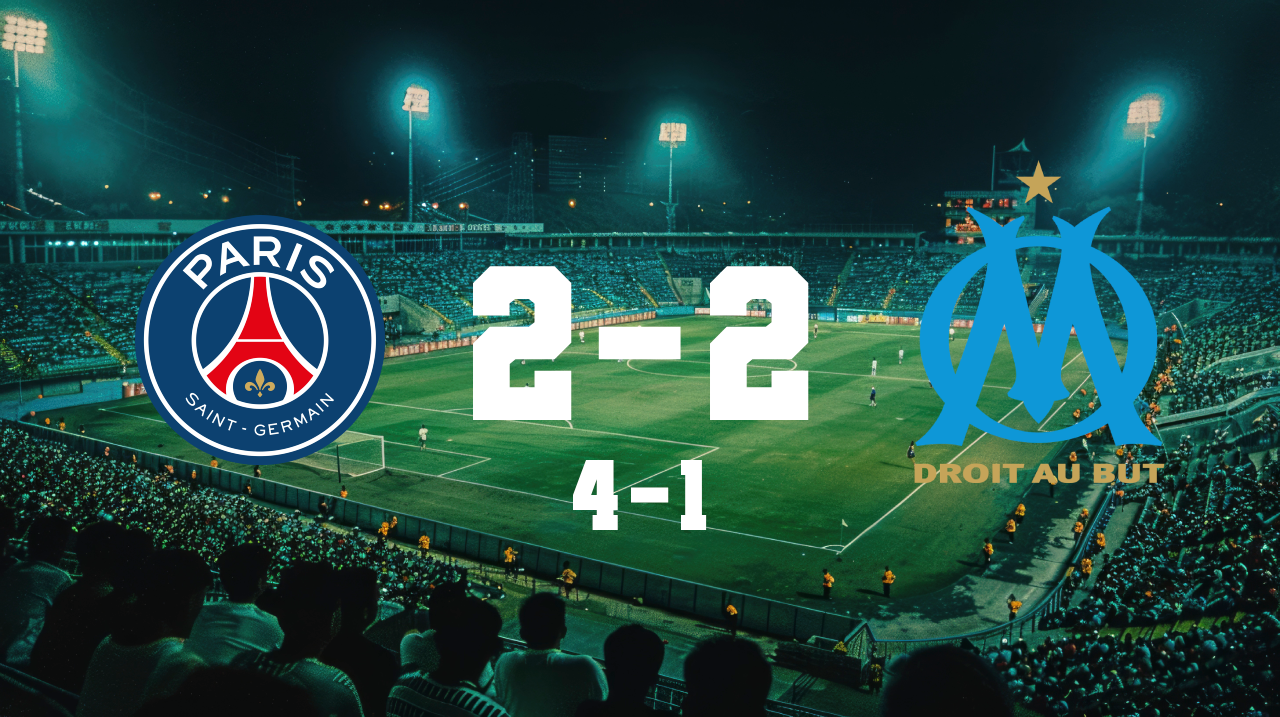
    French Super Cup: PSG Hold Their Nerve to Beat Marseille on PensJanuary 8, 2026

    Paris Saint-Germain and Olympique de Marseille squared off in the most recent edition of the Trophée des Champions (French Super Cup) — a standalone super cup match between the winners of Ligue 1 and the Coupe de France versus the league runners-up — on Thursday, January 8, 2026 at the Jaber Al-Ahmad International Stadium in Kuwait City. This clash does not belong to the Premier League; it is part of the 2025 Trophée des Champions for the 2025-26 season of French football.

    Final Score:
    PSG 2–2 Olympique de Marseille (PSG win 4-1 on penalties)

    Goal Scorers:

    • Paris Saint-Germain: Ousmane Dembélé (13′), Gonçalo Ramos (90+5′)
    • Olympique de Marseille: Mason Greenwood (76′, pen.), Willian Pacho (87′, own goal)

    Match Summary:
    PSG struck first when Ousmane Dembélé netted in the opening quarter-hour, giving the reigning Ligue 1 and Coupe de France double winners an early edge. Marseille responded in the second half with a Mason Greenwood penalty to level, before fortune turned their way again when PSG defender Willian Pacho inadvertently turned the ball into his own net.

    Facing elimination late in regulation time, PSG rallied — and Gonçalo Ramos delivered a dramatic equalizer deep into stoppage time to force a penalty shootout. In the shootout, PSG goalkeeper Lucas Chevalier was decisive, saving two spot kicks to help PSG prevail 4-1 from the spot and secure the trophy.

    Context in the Season:
    This match marked PSG’s 14th Trophée des Champions title and their fourth consecutive success in this competition, reinforcing their domestic dominance. Marseille — still seeking their first Super Cup since 2011 — showed strong competitive spirit but fell just short.

    Because this fixture is a season opener cup final, it does not affect league standings; its significance lies in adding early silverware and momentum ahead of the 2025-26 Ligue 1 campaign.


    Key Player Ratings (on a 1–10 scale)

    • Lucas Chevalier (PSG) — ⭐ 9/10
      A match-defining display in the shootout with multiple saves that swung the trophy in PSG’s favor.
    • Ousmane Dembélé (PSG) — ⭐ 8/10
      Energetic attacking spark and first-half goal set the tone for PSG’s fightback.
    • Gonçalo Ramos (PSG) — ⭐ 8/10
      Came off the bench to rescue PSG with the late equalis­er and converted in the shootout.
    • Mason Greenwood (Marseille) — ⭐ 7/10
      Held his nerve from the penalty spot to keep Marseille in the match.
    • Willian Pacho (Marseille) — ⭐ 6/10
      Unlucky own goal proved costly despite a generally solid defensive effort.