Category: Champions League

  • Champions League Playoff Nights: Drama, Goals, and Momentum Across Europe

    Champions League Playoff Nights: Drama, Goals, and Momentum Across Europe

    Knockout Phase Playoff First Legs

    European nights returned with their familiar mix of tension, noise, and consequence as the UEFA Champions League knockout phase playoffs unfolded across February 17 to 19. This stage — often overshadowed by the glamour of the Round of 16 — carries its own unique intensity. These are the matches where seasons pivot, where momentum is built or broken, and where reputations can shift in a single half of football.

    Across three nights, Europe delivered chaos, control, controversy, and clinical finishing in equal measure.


    Galatasaray Overwhelm Juventus in Istanbul Statement

    Few expected the most explosive result of the week to come in Istanbul — but that is exactly where the tone of the playoffs was set.

    Galatasaray produced a relentless second-half surge to defeat Juventus 5–2, transforming what had briefly looked like a composed Italian away performance into a defensive collapse. Juventus had taken control during the first half through Teun Koopmeiners’ brace, but the match changed irreversibly after the break.

    Galatasaray’s intensity grew with every minute. Noa Lang struck twice, Davinson Sánchez added authority from set-play dominance, and the hosts capitalised ruthlessly after Juventus were reduced to ten men. What followed was less a comeback than a complete territorial takeover — waves of pressure, quick transitions, and a crowd that sensed vulnerability.

    For Juventus, the damage is severe. For Galatasaray, belief is now tangible.


    Real Madrid Grind, PSG Recover, Dortmund Efficient

    Elsewhere on February 17, the night offered a reminder that knockout football rarely rewards aesthetics alone.

    Real Madrid secured a narrow 1–0 victory away at Benfica — the kind of disciplined, controlled performance that has defined their European identity for decades. It was not spectacular, but it was decisive. Madrid managed the tempo, absorbed pressure, and struck when the moment presented itself — a blueprint that has carried them through countless European campaigns.

    Paris Saint-Germain delivered drama of a different kind. Trailing by two goals at Monaco, they mounted a comeback to win 3–2, driven by urgency and individual quality. The shift in momentum was abrupt and unmistakable — Monaco’s early authority dissolving under sustained attacking pressure and PSG’s increasing verticality.

    Borussia Dortmund, meanwhile, produced the most clinical performance of the night. With limited possession but ruthless execution, they defeated Atalanta 2–0 — a result built on early precision and structural discipline. Dortmund did not need control of the match to control the outcome.


    Newcastle’s Statement Performance and Leverkusen’s Control

    If February 17 was about dramatic swings, February 18 delivered dominance.

    Newcastle United produced one of the most emphatic displays of the playoff round, dismantling Qarabag 6–1 away from home. Anthony Gordon’s four-goal performance — explosive, direct, and relentless — effectively settled the tie before halftime. Newcastle pressed aggressively, attacked vertically, and punished every defensive lapse with brutal efficiency.

    It was not simply a victory — it was a declaration of intent.

    Bayer Leverkusen opted for a different kind of authority. Their 2–0 win at Olympiacos was measured, patient, and decisive in key moments. Patrik Schick’s quickfire brace after the hour mark shifted a balanced match into controlled advantage. Olympiacos had their moments, but Leverkusen managed risk intelligently — waiting, then striking with precision.

    Two goals, minimal chaos, maximum control.


    Tension, Margins, and What Comes Next

    The playoff round exists to separate contenders from hopefuls, and across these three nights the margins were unmistakable. Some teams overwhelmed opponents with force. Others advanced through discipline. A few left ties delicately balanced, knowing that the second leg will demand composure under pressure.

    These first legs did not decide qualification — but they defined narratives.

    Galatasaray carry momentum and belief.
    Newcastle carry dominance.
    Real Madrid carry control.
    PSG carry resilience.
    Dortmund and Leverkusen carry efficiency.

    And for the sides chasing deficits, the message is simple: the margin for error is gone.


    The Essence of European Knockout Football

    Champions League knockout football rarely unfolds according to expectation. It rewards timing, punishes hesitation, and amplifies every emotional swing inside a stadium.

    Across February 17 to 19, we saw all of it — surges of momentum, collapses of structure, moments of individual brilliance, and performances shaped by atmosphere as much as tactics.

    The second legs now await — and with them, the real judgment.

    Because in Europe, a first-leg advantage is only a promise.
    Qualification is something else entirely.
  • The Final Night Delivered – Champions League Matchday 8 Recap

    The Final Night Delivered – Champions League Matchday 8 Recap

    The final night of the Champions League league phase wasn’t about drama for drama’s sake. It was about resolution. With all fixtures kicking off simultaneously, every goal reshaped the table in real time, and by the end of the night, uncertainty had been replaced by consequence.

    Some giants secured safe passage. Others slipped into the volatility of the play-offs. A few were simply left behind.

    This was not chaos — it was clarity.


    Matchday 8: Key Results

    Arsenal 3–2 Kairat Almaty

    Arsenal completed a flawless league phase. Eight matches, eight wins.
    The performance wasn’t spectacular, but it didn’t need to be. Control, rotation, and efficiency carried Mikel Arteta’s side across the line as the most consistent team of the phase.

    Arsenal finish top and qualify directly for the Round of 16.


    Benfica 4–2 Real Madrid

    The night’s defining shock.

    Benfica turned Lisbon into a pressure chamber and Real Madrid never fully escaped it. Defensive lapses, combined with Benfica’s ruthless transitions, flipped the narrative late — forcing Madrid into the knockout play-off bracket.

    Benfica survive. Real Madrid lose direct qualification.


    Paris Saint-Germain 1–1 Newcastle United

    A match that felt exactly like the table suggested it would.

    Momentum swung, chances came in waves, but neither side found the decisive blow. The draw leaves both clubs alive, but neither secure — suspended in the uncertainty of the play-offs.


    Manchester City 2–0 Galatasaray

    City did what City do.

    No experimentation. No risk. Just positional dominance and eventual separation. Galatasaray resisted early, but sustained pressure told its story.

    City move on comfortably.


    Napoli 2–3 Chelsea

    One of the most open matches of the night.

    Napoli’s control phases were undone by Chelsea’s transitional sharpness. Mistakes arrived exactly where pressure lived, and Chelsea capitalised.

    Chelsea grab the points they needed. Napoli are left exposed.


    Borussia Dortmund 0–2 Inter

    Inter never needed the ball — only the moments.

    Dortmund’s energy met Inter’s patience, and patience won. Two clean strikes, minimal exposure, and a textbook away performance.

    Inter advance via the play-offs with authority.


    Other Notable Results

    • Liverpool 6–0 Qarabağ – A statement win to close the phase
    • Barcelona 4–1 Copenhagen – Control, goals, and direct qualification
    • Bayern Munich 2–1 PSV – Bayern grind out progression
    • Tottenham 2–0 Eintracht Frankfurt – Calm, professional, decisive
    • Atlético Madrid 1–2 Bodø/Glimt – One of the night’s biggest surprises
    • Club Brugge 3–0 Marseille – A dominant home performance

    The Bigger Picture: Who Goes Where

    ✅ Direct Qualification – Round of 16

    The following clubs finish in the top eight and bypass the play-offs:

    • Arsenal
    • Liverpool
    • Barcelona
    • Bayern Munich
    • Manchester City
    • Tottenham
    • Chelsea
    • Sporting CP

    🔄 Knockout Play-Offs (9–24)

    A dangerous group, where reputation offers no protection:

    • Real Madrid
    • Inter
    • Paris Saint-Germain
    • Newcastle United
    • Juventus
    • Atlético Madrid
    • Atalanta
    • Borussia Dortmund
    • Benfica
    • Bayer Leverkusen
    • Monaco
    • Galatasaray
    • Club Brugge
    • Olympiacos
    • Bodø/Glimt
    • Qarabağ

    ❌ Eliminated

    For several clubs, the European season ends here — undone not by one bad night, but by accumulation.


    Final Thought

    Matchday 8 didn’t roar — it decided.

    There were no miracles without structure, no survival without nerve. The expanded league phase has done what it was designed to do: reward consistency, punish hesitation, and funnel uncertainty into the next round.

    Now, the margins get thinner.
    And the noise only gets louder.

  • The Final Night of the League Phase – UEFA Champions League Matchday 8

    The Final Night of the League Phase – UEFA Champions League Matchday 8

    The Final Night of the League Phase

    Matchday 8 is not about potential anymore.
    It is about consequence.

    With all fixtures kicking off simultaneously on Wednesday night, January 28, the Champions League’s expanded league phase reaches its most unforgiving moment. There are no safety nets, no delayed reactions, and no second chances. Every goal ripples instantly across the table.

    Some clubs arrive knowing a single point will secure direct qualification. Others require a win — and possibly favors elsewhere — to avoid elimination. The emotional texture of this matchday is different: urgency without chaos, calculation without comfort.

    This is where European seasons quietly pivot.


    Key Matches & Tactical Narrative

    Arsenal vs Kairat Almaty

    Arsenal enter Matchday 8 with their structure intact and their objectives clear. Mikel Arteta’s side has managed the league phase with maturity, rarely chasing games and rarely exposing space unnecessarily. Kairat, already eliminated, represent a psychological test more than a tactical one — motivation versus momentum.

    Arsenal’s challenge is focus. The quality gap is obvious, but final matchdays punish complacency.

    MatchThings to ConsiderBetting Picks
    Arsenal vs KairatArsenal dominant in possession control; Kairat struggling away in Europe• Arsenal to Win
    • Arsenal Clean Sheet

    Benfica vs Real Madrid

    This is the night’s most loaded fixture.

    Real Madrid travel to Lisbon knowing control is non-negotiable. A win likely secures direct passage to the Round of 16, while anything less introduces unnecessary volatility. Benfica, excellent at home in Europe, will not chase the game recklessly — they’ll compress space and force Madrid to prove patience.

    This feels less like a spectacle and more like a chessboard.

    MatchThings to ConsiderBetting Picks
    Benfica vs Real MadridTactical restraint, high-stakes pacing• Real Madrid to Win
    • Under 4.5 Goals

    Paris Saint-Germain vs Newcastle United

    Few matches encapsulate Matchday 8’s tension better than this one.

    Both sides hover around the qualification threshold, and neither can afford passivity. PSG’s structure has improved, but Newcastle’s vertical transitions remain dangerous against any defensive line that hesitates.

    This game is unlikely to settle early. Expect momentum swings, emotional spikes, and decisive moments rather than sustained dominance.

    MatchThings to ConsiderBetting Picks
    PSG vs NewcastleTransitional chaos vs individual quality• PSG Win or Draw
    • Over 2.5 Goals

    Manchester City vs Galatasaray

    City arrive needing clarity, not experimentation. Guardiola’s side has treated this league phase as an exercise in positional certainty, and this final night demands execution rather than innovation.

    Galatasaray are resilient, but sustained resistance at the Etihad rarely lasts forever. The question isn’t whether City control the match — it’s how efficiently they convert it into separation.

    MatchThings to ConsiderBetting Picks
    Man City vs GalatasarayPositional dominance vs deep defensive blocks• Man City to Win
    • Over 2.5 Goals

    Napoli vs Chelsea

    This is a survival fixture dressed as a glamour tie.

    Chelsea need points. Napoli need control. Both sides arrive with structural questions and emotional pressure, which often produces open phases rather than sustained rhythm.

    Mistakes feel inevitable here — the question is who capitalizes first.

    MatchThings to ConsiderBetting Picks
    Napoli vs ChelseaTransitional vulnerability on both sides• Chelsea or Draw
    • Both Teams to Score

    Borussia Dortmund vs Inter

    A classic contrast: Dortmund’s vertical energy against Inter’s tactical economy.

    Inter do not need to dominate the ball to dominate the match. Their comfort without possession often frustrates teams built on rhythm and tempo, especially on nights where the table looms larger than the opponent.

    MatchThings to ConsiderBetting Picks
    Dortmund vs InterTempo vs control• Inter Win or Draw
    • Both Teams to Score


    More Predictions

    MatchThings to ConsiderBetting Picks
    Napoli vs ChelseaChelsea need win to preserve knockout push.• Chelsea or Draw
    • Both Teams to Score
    MatchThings to ConsiderBetting Picks
    Brugge vs MarseilleLow-scoring patterns from both.• Under 3.5 Goals• Draw or Marseille
    MatchThings to ConsiderBetting Picks
    Union St-Gilloise vs AtalantaTactical balance: Atalanta’s structured dynamic vs home side’s counter risks.• Atalanta or Draw• Both Teams to Score
    MatchThings to ConsiderBetting Picks
    Eintracht Frankfurt vs TottenhamSpurs need points to solidify knockout chances.• Tottenham to Win• Under 4.5 Goals
    MatchThings to ConsiderBetting Picks
    Liverpool vs QarabagClear offensive imbalance; Liverpool aiming goal inflow.• Liverpool to Win• Liverpool Over 1.5 Goals
    MatchThings to ConsiderBetting Picks
    PSV vs Bayern MunichBayern’s Ligue pace vs PSV’s physical structure; home side pushing for knockout opportunity.• Bayern to Win• Both Teams to Score
    MatchThings to ConsiderBetting Picks
    Barcelona vs CopenhagenBarcelona’s possession prowess vs Copenhagen’s organised blocks.• Barcelona to Win• Both Teams to Score
    MatchThings to ConsiderBetting Picks
    Atlético Madrid vs Bodø/GlimtAtlético’s tactical discipline vs Bodø/Glimt’s vertical intensity.• Atlético to Win• Under 3.5 Goals
  • Slavia Praha vs Barcelona: Fermín’s Brace, Lewandowski’s Own Goal — and a 4–2 Escape in the Champions League

    Slavia Praha vs Barcelona: Fermín’s Brace, Lewandowski’s Own Goal — and a 4–2 Escape in the Champions League

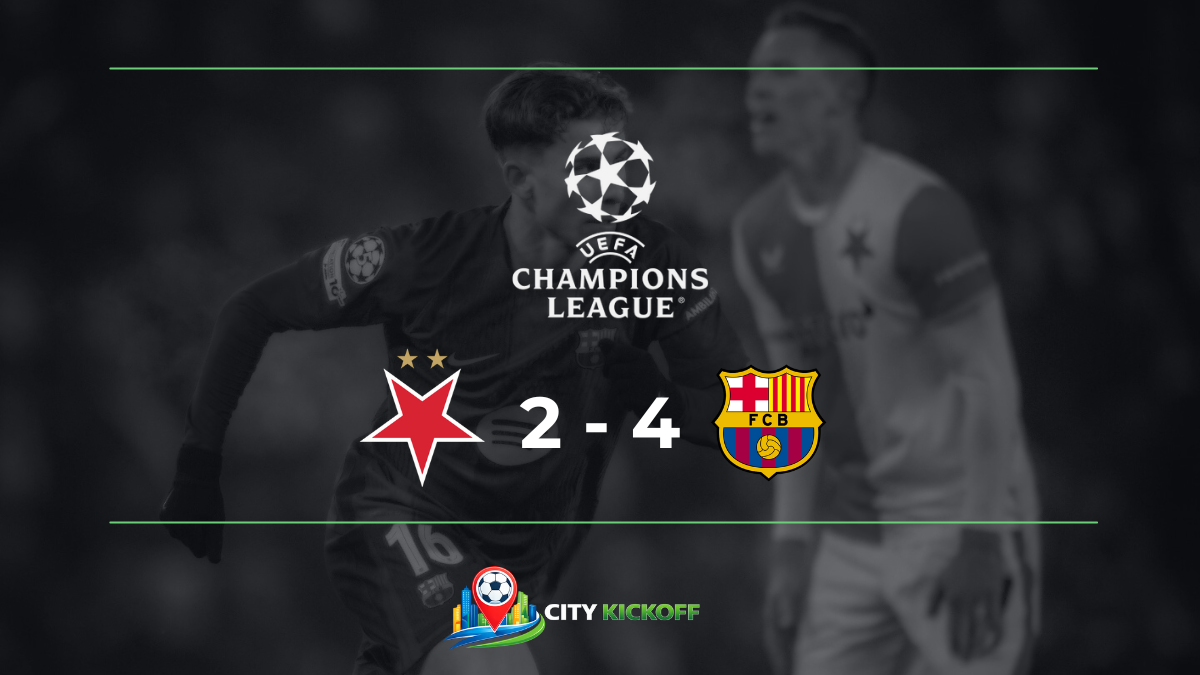
    Barcelona came from behind to beat Slavia Praha 4–2 with a Fermín López brace and Olmo’s spark.

    Prague in January has a way of stripping football back to essentials: touch, nerve, breath. At Eden Arena on Wednesday night, with the temperature sitting below freezing, Barcelona looked like a side trying to play with gloves on — until the game demanded they take them off.

    They did, eventually, and the scoreline says “2–4” in Barcelona’s favour. But it wasn’t the tidy European away win that a heavyweight imagines when the draw is made. It was messy, cold, and uncomfortable — and that’s precisely why it mattered.

    Barcelona’s league-phase campaign still has edge to it, still needs points and goal difference, and still can’t afford an off-night. In that sense, this was less a performance to admire than a result to bank.

    A night of corners, shoulders, and the one player who kept finding space

    Slavia Praha 2–4 Barcelona
    UEFA Champions League, league phase — Wednesday, January 21, 2026
    Eden Arena (Prague)

    Slavia struck first, and they did it the way underdogs dream of doing it: by making a set-piece feel like a rehearsed ambush. A corner was worked across the box, Tomáš Holeš flicked it on, and Vasil Kušej forced it over the line with bodies converging at the far post. 1–0 after 10 minutes, and suddenly Barcelona had to play the match Slavia wanted.

    Barcelona’s response, crucially, came from a midfielder arriving like a forward. Fermín López has that instinct — the knack of appearing where the pitch is briefly empty. His equaliser on 34 minutes was a sharp finish from inside the area, squeezed in at the near post, and it steadied Barcelona’s pulse. Eight minutes later, he did it again: this time from the edge of the box, picked out with precision into the bottom corner. In a half where Barcelona oscillated between control and vulnerability, López was the one constant.

    And yet, they still went in level — because the same weakness that had opened the match came back to bite them. Under pressure defending another corner, Robert Lewandowski glanced the ball into his own net. Barcelona had turned the game, then handed it back.

    Why Barcelona’s second half felt different

    At 2–2, this had the shape of a night that can rot on you: frozen ground, a crowd sensing history, a favourite with one eye on bigger stages. But Barcelona’s second half was more purposeful — not just more possession, but more intent with it.

    They pressed Slavia deeper, recycled the ball faster, and started to force second balls around the box. The chances came — and were missed — until the key swing arrived from the bench. Dani Olmo, introduced after Pedri was forced off with a muscular injury, changed the temperature of the match with one strike: a fierce effort from the edge of the box into the top corner on 64 minutes. It was the kind of goal that quiets a stadium not through silence, but through acceptance.

    From there, Barcelona finally played like a team that understood the stakes. Lewandowski, who had lived a full storyline already — scorer at the wrong end, then redeemer-in-waiting — finished the job on 70 minutes. Marcus Rashford, another second-half substitute, tore down the left and delivered into the area; Lewandowski reacted quickest to poke it past Jindřich Staněk and put the night out of Slavia’s reach.

    What the result means right now

    Barcelona left Prague with three points and a 4–2 win that keeps them in the traffic jam around the automatic qualification places. The result lifted them to ninth in the league-phase standings on 13 points with one game remaining, part of a crowded chase for the top eight. Slavia, meanwhile, stayed near the bottom with just three points.

    If you’re looking for a neat moral, it’s this: Barcelona can still overwhelm teams when they accelerate, but they are not currently built to sleepwalk through awkward nights. In Prague, the set-piece concessions and the self-inflicted equaliser were warning flares. The second-half control, the bench impact, and Fermín López’s decisiveness were the antidote.

    The best Champions League sides don’t just win when it’s comfortable — they win when the air hurts your hands and the match keeps asking you questions. Barcelona didn’t answer all of them at Eden Arena. But they answered the one that mattered most.

  • Real Madrid vs Monaco: Bernabéu Blitz in a 6–1 Champions League Statement

    Real Madrid vs Monaco: Bernabéu Blitz in a 6–1 Champions League Statement

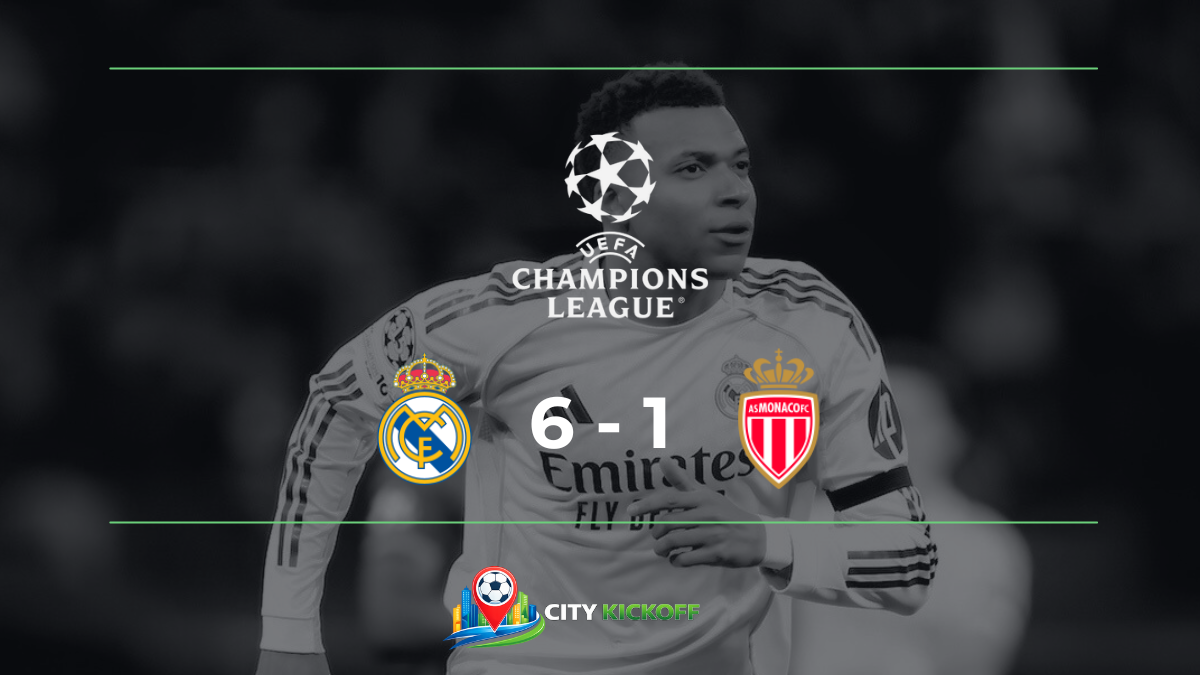
    Real Madrid thrashed Monaco 6–1 UEFA Champions League at the Bernabéu, with Mbappé and Vinícius starring.

    The Santiago Bernabéu was awash in white again on the night of 20 January 2026, but this night felt different — not just another routine European Tuesday, but a release valve for a club under pressure. Real Madrid’s 6–1 obliteration of Monaco was raw, emphatic and uneven in its beauty, a performance that read like a collective exhale after a tense patch of football that had seen Galácticos and critics at each other’s throats.

    From the first whistle, Madrid played with the sort of fluid, attacking confidence that had been intermittently missing this season. Monaco arrived with ambition and tactical intent, but were swiftly overwhelmed by the champions’ momentum and positional superiority. By night’s end, Real Madrid’s dismantling of the visitors was less a surprise result than a statement of purpose.

    A Match That Mattered

    This wasn’t just another group stage fixture; it was a chance for Real to steady themselves in a campaign marked by managerial change, domestic stumbles and a Bernabéu crowd that has quickly become demanding. The result sends a clear message — they are still a European force, capable of tearing teams apart in waves.

    Monaco, for their part, arrived with a tactical shape designed to suffocate space between the lines and force Madrid wide. Early on, though, they were punished for it.

    Quickfire Openers Set the Tone

    Real Madrid’s tempo from minute one was striking — aggressive in transition and ruthless in execution. Kylian Mbappé, facing his former club, embodied that edge. He struck twice inside the first half-hour, first with a cool finish from the edge of the area and then with another clinical move, pinning Monaco back and electrifying the home crowd.

    Those early goals weren’t flukes — they were products of intense attacking phases that exploited Monaco’s high defensive line and invited pressure. Madrid’s combination of verticality through Mbappé, and creative overload down the right through Vinícius Jr., had defenders scrambling before the game had truly settled.

    Control, Creativity, and a Cascade of Goals

    The second half unfolded as a testament to Madrid’s level of control. Franco Mastantuono added a third right after the break with a finish that was both balanced and composed. Moments later, an own goal from Thilo Kehrer — unfortunate but telling of the pressure — made it 4–0.

    Vinícius, who entered the night under a cloud of spectator discontent, became the defining figure of the evening. His third goal — a solo strike that threaded through a crowded defence — and three assists, had a Bernabéu crowd turning fervent supporters as the game progressed.

    Monaco’s Jordan Teze managed a consolatory strike midway through the second period, a reminder that even in collapse there is competitive spirit. But Jude Bellingham’s composed finish late on sealed the emphatic margin, capping a display that felt as comprehensive as it was cathartic.

    Tactical Reflection

    Tactically, Real Madrid struck a rare balance: vertical threat without losing shape. Their pressing moments were timely, often forcing Monaco into hurried build-ups that Madrid exploited immediately. The interplay between central midfield and the wide forwards showed a clarity that had occasionally been missing this season.

    Monaco’s approach, bold in outline but brittle in execution, struggled to sustain any rhythm once Madrid scored. Their midfield, expected to act as a buffer, was consistently bypassed. The result was a night where weaknesses were magnified by Madrid’s ruthless efficiency.

    What This Result Means Now

    For Real Madrid, this victory boosts their position in the group and restores a bit of European swagger. It is a reminder that, when in sync, their attack can still operate at an elite level. Monaco, meanwhile, must regroup; this loss leaves their qualification hopes hanging by fine margins and underlines the gulf that can exist in a competition where a single night can decide narratives.

    There was rhythm in every pass, intent in every run, and when the echo of 6–1 settled over the Bernabéu, a clear truth remained: Real Madrid can still carve through Europe with devastating effect — especially when their brightest stars find form on the biggest nights.

  • Sporting CP vs Paris Saint-Germain: Suarez Strikes Late as Lions Roar to a 2-1 Champions League Triumph

    Sporting CP vs Paris Saint-Germain: Suarez Strikes Late as Lions Roar to a 2-1 Champions League Triumph

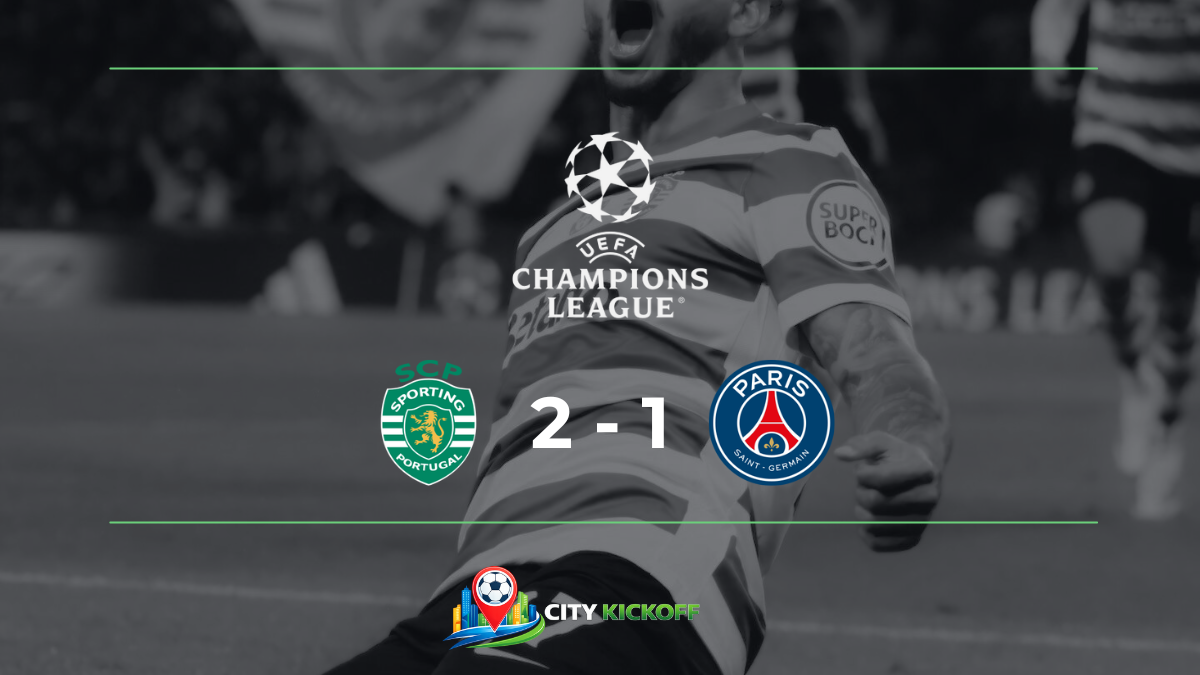
    Sporting CP stunned holders PSG 2-1 in the UEFA Champions League as Luis Suárez’s late double sealed a seismic win in Lisbon.

    It was the sort of night Lisbon savoured long before the final whistle — the Estádio José Alvalade simmering in the cold January air, aware this was no ordinary midweek fixture. Sporting CP, fighting for their Champions League lives, hosted Paris Saint-Germain, the reigning holders, in a Round 7 clash that felt decisive for both teams’ paths through Europe.

    By the time the game sparked to life in the second half, however, it was clear this would be defined not by the French visitors’ pedigree but by Sporting’s appetite and urgency. And when Luis Suárez’s header rippled the net deep into stoppage time, the narrative crystallised: this was Sporting’s night.

    There was an edge of improbability to it — PSG came to Lisbon with their stars, their rhythm and their pressing ambition intact. Sporting, driven by necessity and atmosphere, produced the sort of performance that will echo in club lore this season.

    A Game of Two Halves, a Season-Defining Finish

    The opening 45 minutes felt like a lesson in initiative versus intent. PSG controlled the ball, pushed forward with authority and fashioned the clearer openings. Chances flowed through Vitinha and the ever-threatening Nuno Mendes only for Rui Silva to stand tall, denying PSG an early goal. Moments that should have yielded breakthroughs didn’t — and the first half closed goalless, PSG dominant in possession but without a telling edge.

    Sporting’s reaction after the break was more visceral than tactical at first — urgency amplified by the home crowd, energy in every duel. And when Georgios Vagiannidis’ corner found Suárez at the near post in the 74th minute, Sporting had their lead. It wasn’t pretty; it was gritty, precise and perfectly timed.

    PSG responded with quality. Substitute Khvicha Kvaratskhelia twisted space, found daylight and slotted home to level seven minutes later, nudging the visitors back into contention. But these were moments of fine margins, and in European football such moments often decide nights.

    Suárez: The Unlikely Hero

    Luis Suárez, entering this match without the spotlight that usually accompanies his name, ended up consuming it. His second — a towering header deep into added time — wasn’t just a goal; it was a statement. An assertion of intent from a club chasing momentum, and a dagger to PSG’s hopes of direct qualification for the knockout phase.

    There was something almost symbolic in the manner of the goal: Sporting, enduring in the trenches of midfield and defence, winning the battles that mattered, and then rising above to seize glory when it counted most. Suárez’s brace was less about individual brilliance and more about collective persistence finding its embodiment in one decisive moment.

    Tactical Tensions and Turning Points

    What distinguished Sporting’s performance wasn’t raw invention but structural resolve. Against a PSG side content to circulate possession and probe patiently, Sporting pressed with intent after the break, especially in zones that mattered — wide channels in transition became crucibles for danger. PSG’s high line, usually an asset, was exposed on more than one occasion once Sporting eased into their rhythm.

    For PSG, dominance didn’t translate into control. Two goals were disallowed earlier in the match, moments that might have rewritten the script but instead left Les Parisiens chasing the narrative — and ultimately the result.

    What It Means Now

    This result is a jolt in the context of the Champions League group phase. Sporting’s tally of points — now level with PSG — reshapes the battle for qualification places, tightening a section where direct passage to the knockout rounds was starting to feel increasingly crucial for both sides. PSG, champions last season, must now re-assess momentum; Sporting, by contrast, are buoyed and alive.

    For Sporting, this isn’t merely three points. It’s a turning point — affirmation that intensity, focus and belief can subvert reputation on Europe’s biggest nights. For PSG, it’s a reminder that possession alone won’t deliver the outcomes this stage demands.

    As the Lisbon floodlights dimmed, Suárez’s late touch of fortune summed up the broader truth of this campaign: in the Champions League, merit is won in the last minute as often as the first. The implications will unfold in the weeks ahead, but on this night Sporting CP wrote their own chapter.

  • Bodø/Glimt vs Manchester City: Champions League Shock in Norway as City Fall 3–1

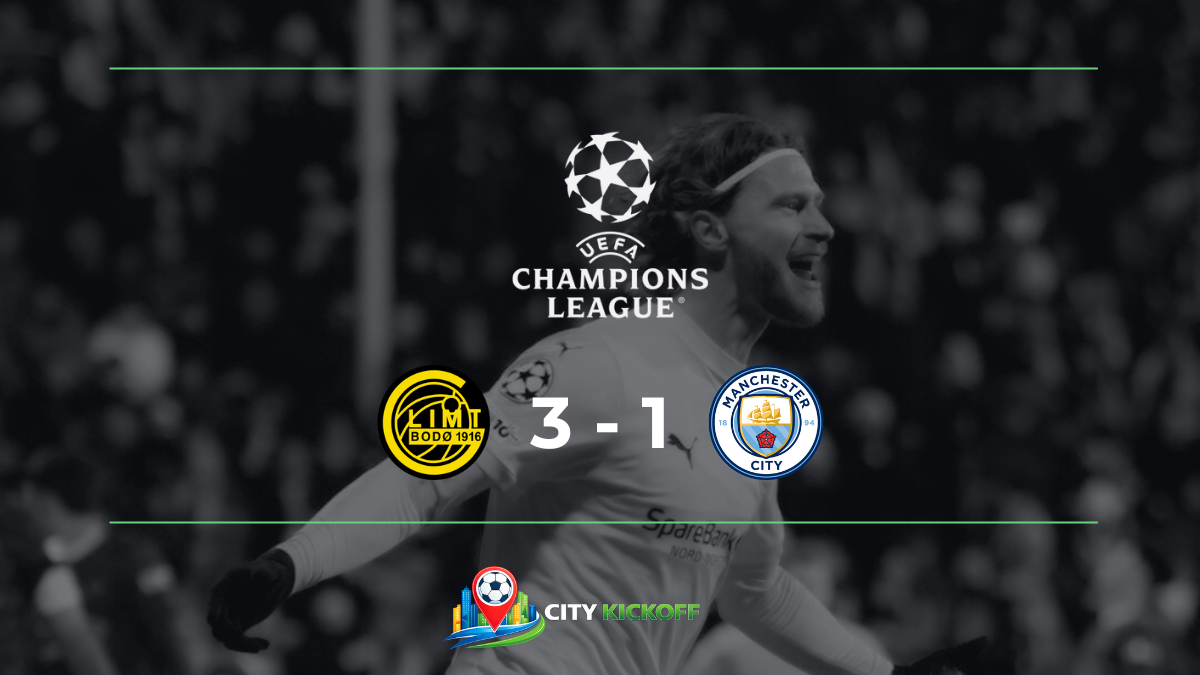
    Bodø/Glimt vs Manchester City: Champions League Shock in Norway as City Fall 3–1

    The Arctic wind howled around Aspmyra Stadion late into the night of January 20, 2026, but nothing matched the cold reality sinking into Pep Guardiola’s Manchester City. What promised to be a routine group-stage finale for the defending European champions dissolved into one of the competition’s most startling upsets in memory: a 3–1 defeat at the hands of Bodø/Glimt.

    City arrived as heavy favourites, their continental pedigree dwarfing that of the Norwegian minnows. Yet this was not a grinding attritional loss — it was a tactical dismantling, sparked by intent, execution, and a red card that shifted the game’s balance irreversibly.

    From the outset, Bodø/Glimt’s plan was obvious and brilliantly simple: absorb early pressure, strike with precision on the counter, and make the artificial turf and Arctic conditions an asset rather than an obstacle. Within the first 25 minutes they had done precisely that.

    Kasper Høgh, a striker more used to making noise in Scandinavia than silencing European royalty, emerged as the early protagonist. Two goals in quick succession — at 22 and 24 minutes — were textbook counterattacks: vertical transitions that pulled City’s midfield out of shape and exposed inexperienced central defenders to Bodø’s pace.

    City’s response was uncharacteristically flat. They dominated possession but lacked penetration, a theme that has crept into performances this season. Erling Haaland, often the focal point of City’s attacking rhythm, was peripheral; the ball never seemed to stick long enough in dangerous areas for him to assert himself consistently.

    In the second half, Jens Petter Hauge’s finish extended the lead to 3–0 — a scoreline that, if honest to the chances and transitions of the first hour, felt deserved. When Rayan Cherki finally pulled one back with a well-struck attempt from outside the area, City briefly stirred.

    But the moment that truly defined the night came not on the scoresheet but in the disciplinary book. Rodri, usually the metronomic anchor in midfield, was dismissed after receiving two yellow cards within 60 seconds — a reckless pair of challenges that not only reduced City to ten men but also drained whatever tactical confidence Guardiola’s side still retained.

    From there, City’s shape dissolved. As the visitors pushed numbers forward trying to swing the momentum back, gaps appeared that Bodø/Glimt exploited with clinical discipline. The Norwegian side, now with real belief and a lead to protect, shifted between compact defending and rapid transition with a tactical clarity rarely seen from underdogs at this level.

    Looking at the broader competition context, the loss is more than a single blemish — it jeopardises City’s pursuit of a top-eight spot in the league phase. With one group game remaining against Galatasaray at the Etihad, this result means there is no margin for error. A win is imperative if they are to avoid the playoff round or worse.

    For Bodø/Glimt, the victory is seismic. Not just because it’s their first in the Champions League, but because it was earned through tactical intelligence and spirited execution against one of Europe’s technical elites. Nights like this are the heartbeat of the competition — where strategy, spirit, and circumstance collide to rewrite expectations.

    City will return to Manchester to nurse bruised egos and recalibrate. But for one freezing night above the Arctic Circle, Bodø/Glimt wrote themselves into European folklore with a performance that was as inspiring as it was destructive to their illustrious opponents.

  • UEFA Champions League Matchday 7

    UEFA Champions League Matchday 7

    UEFA Champions League Matchday 7 preview with tactical analysis, key players, and what’s at stake across Europe’s premier club competition.

    of growing consequence. Matchday 7 of the 2025/26 season arrives at a moment where the margins are narrowing and the expanded league phase begins to reveal its true character. With just two rounds remaining, the balance between control and urgency will define how teams approach the midweek.

    January European nights rarely allow for romanticism. Squad rotation, physical management, and tactical restraint all come into play as domestic schedules intensify. Yet the Champions League demands clarity of purpose. For some clubs, this matchday represents an opportunity to secure a direct path to the Round of 16. For others, it is about survival — staying within reach of the knockout playoff positions before time runs out.


    Matchday 7

    This stage of the league phase is where strategy overtakes experimentation. Coaches are no longer gathering information — they are making decisions that could define their European season.


    Key Fixtures to Watch

    Not every match carries the same narrative weight, but several fixtures stand out for their stylistic contrast and competitive implications.

    FixtureDateEditorial Focus
    Real Madrid vs AS Monaco21 JanPositional control vs structural discipline
    Tottenham Hotspur vs Borussia Dortmund20 JanTempo, transitions, and midfield risk
    Sporting CP vs Paris Saint-Germain20 JanCompact defending against individual brilliance
    Bodø/Glimt vs Manchester City20 JanIntensity versus positional dominance

    Real Madrid’s home fixture against Monaco places emphasis on rhythm and patience. Madrid’s ability to manage space between the lines will be tested by a Monaco side comfortable defending in numbers and waiting for moments to counter.

    In North London, Tottenham and Borussia Dortmund meet in a game likely dictated by tempo. Spurs’ willingness to commit numbers forward contrasts with Dortmund’s transitional threat, making defensive balance a central tactical theme.


    Tactical Expectations Across the Matchday

    Matchday 7 is unlikely to produce reckless football. Instead, the prevailing tactical patterns suggest a round shaped by restraint, control, and selective aggression.

    Tactical ThemeWhat to Expect
    Possession ManagementFewer risks in buildup, longer circulation phases
    Transitional MomentsGames decided by isolated breaks, not volume
    Midfield CongestionSpace between the lines heavily contested
    Defensive CompactnessBlocks prioritized over sustained pressing

    Manchester City’s visit to Bodø/Glimt is emblematic of this contrast. The Norwegian side’s intensity and verticality will test City’s structure, but the visitors’ positional discipline is designed precisely for such environments. How long Bodø/Glimt can sustain pressure without exposing space will likely define the contest.


    What’s at Stake

    With only two matchdays remaining, the league table has become a live ecosystem rather than a static ranking.

    Clubs pushing for the top eight are now managing risk, aware that a single point could be enough to secure automatic qualification. Teams positioned between ninth and twenty-fourth face a different pressure — accumulation rather than perfection — knowing that consistency outweighs spectacle.

    For those near the bottom, the margin is unforgiving. Matchday 7 offers little room for narrative redemption; results must follow intent.


    Players Who Could Shape the Matchday

    While systems dominate outcomes at this stage, certain players retain the capacity to bend matches away from structure.

    PlayerClubInfluence
    Jude BellinghamReal MadridTempo control and late box presence
    Phil FodenManchester CitySpatial intelligence between lines
    Kylian MbappéParis Saint-GermainAbility to disrupt compact blocks
    Son Heung-minTottenham HotspurTransition threat and leadership

    These players are not relied upon for volume, but for moments — the subtle movement, the delayed run, the decisive action when space briefly appears.


    As Matchday 7 unfolds across Europe, the Champions League enters its most revealing phase. The noise fades, the margins tighten, and the competition begins to reward clarity over ambition. For clubs with genuine continental aspirations, this is the week where intent must translate into control — and where seasons quietly pivot toward success or disappointment.

  • UEFA Champions League Matchday 7 Preview

    UEFA Champions League Matchday 7 Preview

    The UEFA Champions League returns this week under the weight of growing consequence. Matchday 7 of the 2025/26 season arrives at a moment where the margins are narrowing and the expanded league phase begins to reveal its true character. With just two rounds remaining, the balance between control and urgency will define how teams approach the midweek.

    January European nights rarely allow for romanticism. Squad rotation, physical management, and tactical restraint all come into play as domestic schedules intensify. Yet the Champions League demands clarity of purpose. For some clubs, this matchday represents an opportunity to secure a direct path to the Round of 16. For others, it is about survival — staying within reach of the knockout playoff positions before time runs out.


    Matchday 7

    This stage of the league phase is where strategy overtakes experimentation. Coaches are no longer gathering information — they are making decisions that could define their European season.


    Key Fixtures to Watch

    Not every match carries the same narrative weight, but several fixtures stand out for their stylistic contrast and competitive implications.

    FixtureDateEditorial Focus
    Real Madrid vs AS Monaco21 JanPositional control vs structural discipline
    Tottenham Hotspur vs Borussia Dortmund20 JanTempo, transitions, and midfield risk
    Sporting CP vs Paris Saint-Germain20 JanCompact defending against individual brilliance
    Bodø/Glimt vs Manchester City20 JanIntensity versus positional dominance

    Real Madrid’s home fixture against Monaco places emphasis on rhythm and patience. Madrid’s ability to manage space between the lines will be tested by a Monaco side comfortable defending in numbers and waiting for moments to counter.

    In North London, Tottenham and Borussia Dortmund meet in a game likely dictated by tempo. Spurs’ willingness to commit numbers forward contrasts with Dortmund’s transitional threat, making defensive balance a central tactical theme.


    Tactical Expectations Across the Matchday

    Matchday 7 is unlikely to produce reckless football. Instead, the prevailing tactical patterns suggest a round shaped by restraint, control, and selective aggression.

    Tactical ThemeWhat to Expect
    Possession ManagementFewer risks in buildup, longer circulation phases
    Transitional MomentsGames decided by isolated breaks, not volume
    Midfield CongestionSpace between the lines heavily contested
    Defensive CompactnessBlocks prioritized over sustained pressing

    Manchester City’s visit to Bodø/Glimt is emblematic of this contrast. The Norwegian side’s intensity and verticality will test City’s structure, but the visitors’ positional discipline is designed precisely for such environments. How long Bodø/Glimt can sustain pressure without exposing space will likely define the contest.


    What’s at Stake

    With only two matchdays remaining, the league table has become a live ecosystem rather than a static ranking.

    Clubs pushing for the top eight are now managing risk, aware that a single point could be enough to secure automatic qualification. Teams positioned between ninth and twenty-fourth face a different pressure — accumulation rather than perfection — knowing that consistency outweighs spectacle.

    For those near the bottom, the margin is unforgiving. Matchday 7 offers little room for narrative redemption; results must follow intent.


    Players Who Could Shape the Matchday

    While systems dominate outcomes at this stage, certain players retain the capacity to bend matches away from structure.

    PlayerClubInfluence
    Jude BellinghamReal MadridTempo control and late box presence
    Phil FodenManchester CitySpatial intelligence between lines
    Kylian MbappéParis Saint-GermainAbility to disrupt compact blocks
    Son Heung-minTottenham HotspurTransition threat and leadership

    These players are not relied upon for volume, but for moments — the subtle movement, the delayed run, the decisive action when space briefly appears.


    As Matchday 7 unfolds across Europe, the Champions League enters its most revealing phase. The noise fades, the margins tighten, and the competition begins to reward clarity over ambition. For clubs with genuine continental aspirations, this is the week where intent must translate into control — and where seasons quietly pivot toward success or disappointment.