Author: CityKickoffAdmin

  • The Mexican Fan Who Extinguished Paris’ Eternal Flame During the 1998 World Cup

    The Mexican Fan Who Extinguished Paris’ Eternal Flame During the 1998 World Cup

    During the 1998 FIFA World Cup in France, an incident occurred that would go down not in official match records, but in football folklore.

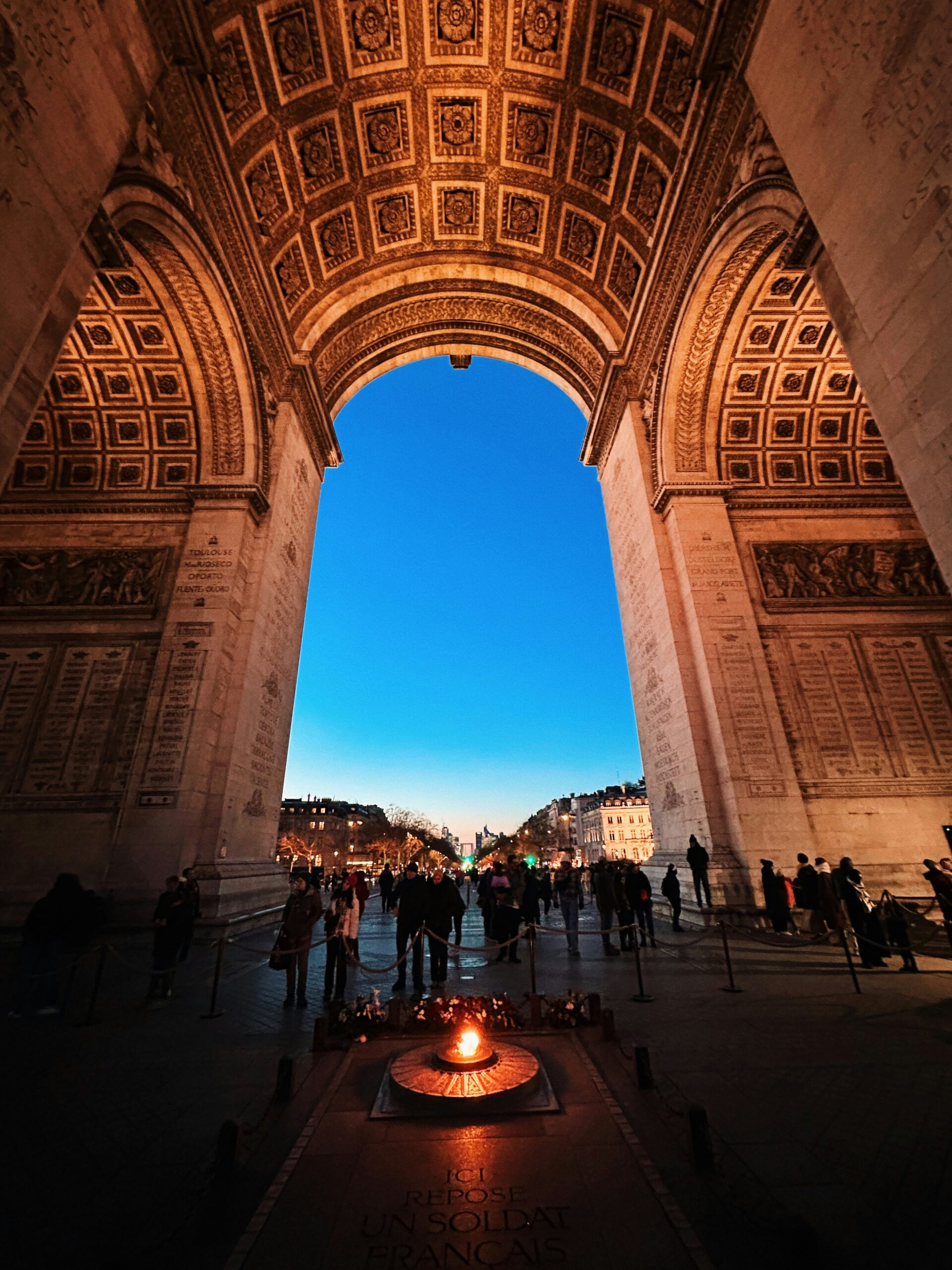
    Near the Arc de Triomphe in Paris burns the Eternal Flame, lit in 1921 to honor the Unknown Soldier of World War I. It is a deeply symbolic memorial and one of the most solemn sites in the city.

    In July 1998, in the middle of World Cup celebrations, a 24-year-old Mexican football fan was arrested after the Eternal Flame was suddenly extinguished. French authorities charged him with public intoxication and “insulting the memory of the dead.”

    What exactly happened?

    Contemporary reports from the time state that the man poured a liquid onto the flame, causing it to go out. He was detained, questioned, and later released. The flame was quickly relit, and the memorial itself was not damaged.

    However, as the story traveled across borders—especially through Latin American media and fan conversations—the details evolved. Over time, the anecdote transformed into a much more outrageous version:
    that the fan had urinated on the Eternal Flame, extinguishing it.

    To this day, that version remains unconfirmed by official records, yet it has become the most widely repeated one. Whether exaggeration, misunderstanding, or pure myth-making, the story stuck.

    Today, the incident lives on as a bizarre footnote of World Cup history—a reminder of how football passion, alcohol, and mythology can collide, turning a brief police report into a legendary anecdote told and retold for decades.

    Sometimes, football history isn’t written in goals…
    but in stories no one forgets.

  • The Final Night of the League Phase – UEFA Champions League Matchday 8

    The Final Night of the League Phase – UEFA Champions League Matchday 8

    The Final Night of the League Phase

    Matchday 8 is not about potential anymore.
    It is about consequence.

    With all fixtures kicking off simultaneously on Wednesday night, January 28, the Champions League’s expanded league phase reaches its most unforgiving moment. There are no safety nets, no delayed reactions, and no second chances. Every goal ripples instantly across the table.

    Some clubs arrive knowing a single point will secure direct qualification. Others require a win — and possibly favors elsewhere — to avoid elimination. The emotional texture of this matchday is different: urgency without chaos, calculation without comfort.

    This is where European seasons quietly pivot.


    Key Matches & Tactical Narrative

    Arsenal vs Kairat Almaty

    Arsenal enter Matchday 8 with their structure intact and their objectives clear. Mikel Arteta’s side has managed the league phase with maturity, rarely chasing games and rarely exposing space unnecessarily. Kairat, already eliminated, represent a psychological test more than a tactical one — motivation versus momentum.

    Arsenal’s challenge is focus. The quality gap is obvious, but final matchdays punish complacency.

    MatchThings to ConsiderBetting Picks
    Arsenal vs KairatArsenal dominant in possession control; Kairat struggling away in Europe• Arsenal to Win
    • Arsenal Clean Sheet

    Benfica vs Real Madrid

    This is the night’s most loaded fixture.

    Real Madrid travel to Lisbon knowing control is non-negotiable. A win likely secures direct passage to the Round of 16, while anything less introduces unnecessary volatility. Benfica, excellent at home in Europe, will not chase the game recklessly — they’ll compress space and force Madrid to prove patience.

    This feels less like a spectacle and more like a chessboard.

    MatchThings to ConsiderBetting Picks
    Benfica vs Real MadridTactical restraint, high-stakes pacing• Real Madrid to Win
    • Under 4.5 Goals

    Paris Saint-Germain vs Newcastle United

    Few matches encapsulate Matchday 8’s tension better than this one.

    Both sides hover around the qualification threshold, and neither can afford passivity. PSG’s structure has improved, but Newcastle’s vertical transitions remain dangerous against any defensive line that hesitates.

    This game is unlikely to settle early. Expect momentum swings, emotional spikes, and decisive moments rather than sustained dominance.

    MatchThings to ConsiderBetting Picks
    PSG vs NewcastleTransitional chaos vs individual quality• PSG Win or Draw
    • Over 2.5 Goals

    Manchester City vs Galatasaray

    City arrive needing clarity, not experimentation. Guardiola’s side has treated this league phase as an exercise in positional certainty, and this final night demands execution rather than innovation.

    Galatasaray are resilient, but sustained resistance at the Etihad rarely lasts forever. The question isn’t whether City control the match — it’s how efficiently they convert it into separation.

    MatchThings to ConsiderBetting Picks
    Man City vs GalatasarayPositional dominance vs deep defensive blocks• Man City to Win
    • Over 2.5 Goals

    Napoli vs Chelsea

    This is a survival fixture dressed as a glamour tie.

    Chelsea need points. Napoli need control. Both sides arrive with structural questions and emotional pressure, which often produces open phases rather than sustained rhythm.

    Mistakes feel inevitable here — the question is who capitalizes first.

    MatchThings to ConsiderBetting Picks
    Napoli vs ChelseaTransitional vulnerability on both sides• Chelsea or Draw
    • Both Teams to Score

    Borussia Dortmund vs Inter

    A classic contrast: Dortmund’s vertical energy against Inter’s tactical economy.

    Inter do not need to dominate the ball to dominate the match. Their comfort without possession often frustrates teams built on rhythm and tempo, especially on nights where the table looms larger than the opponent.

    MatchThings to ConsiderBetting Picks
    Dortmund vs InterTempo vs control• Inter Win or Draw
    • Both Teams to Score


    More Predictions

    MatchThings to ConsiderBetting Picks
    Napoli vs ChelseaChelsea need win to preserve knockout push.• Chelsea or Draw
    • Both Teams to Score
    MatchThings to ConsiderBetting Picks
    Brugge vs MarseilleLow-scoring patterns from both.• Under 3.5 Goals• Draw or Marseille
    MatchThings to ConsiderBetting Picks
    Union St-Gilloise vs AtalantaTactical balance: Atalanta’s structured dynamic vs home side’s counter risks.• Atalanta or Draw• Both Teams to Score
    MatchThings to ConsiderBetting Picks
    Eintracht Frankfurt vs TottenhamSpurs need points to solidify knockout chances.• Tottenham to Win• Under 4.5 Goals
    MatchThings to ConsiderBetting Picks
    Liverpool vs QarabagClear offensive imbalance; Liverpool aiming goal inflow.• Liverpool to Win• Liverpool Over 1.5 Goals
    MatchThings to ConsiderBetting Picks
    PSV vs Bayern MunichBayern’s Ligue pace vs PSV’s physical structure; home side pushing for knockout opportunity.• Bayern to Win• Both Teams to Score
    MatchThings to ConsiderBetting Picks
    Barcelona vs CopenhagenBarcelona’s possession prowess vs Copenhagen’s organised blocks.• Barcelona to Win• Both Teams to Score
    MatchThings to ConsiderBetting Picks
    Atlético Madrid vs Bodø/GlimtAtlético’s tactical discipline vs Bodø/Glimt’s vertical intensity.• Atlético to Win• Under 3.5 Goals
  • Major European Football Fixtures —Weekend Review

    Major European Football Fixtures —Weekend Review

    Review of the weekend’s major European football fixtures — Arsenal vs United, Villarreal vs Real Madrid, Juventus vs Napoli, Bayern vs Augsburg, and Metz vs Lyon with confirmed results and tactical context.


    The weekend of January 24–25, 2026 featured pivotal fixtures across Europe’s top leagues, offering tactical intrigue, shifting momentum, and results with real implications for the remainder of the season. From a high-stakes Premier League derby to decisive Serie A and Bundesliga outcomes, this matchday underscored how January football can shape narratives far beyond its cold nights.

    Here’s a comprehensive look at how the key matches unfolded:


    Arsenal 2–3 Manchester United (Premier League)

    In a pulsating Emirates Stadium clash, Manchester United edged Arsenal 3–2 in a contest that swung back and forth before late drama. Arsenal took an early lead and dominated possession at times, but United responded — showing resilience and clinical finishing.

    The Gunners opened through an early advantage, only for United to draw level before halftime. Second-half tactical switches and a decisive late goal secured all three points for United, narrowing the title race margins and reinforcing the competitive depth of the Premier League top four.

    This result illustrates how high-intensity tactical duels and individual moments can define outcomes in rivalry fixtures where positional discipline meets counterattacking intent.


    Villarreal 0–2 Real Madrid (LaLiga)

    Real Madrid continued their LaLiga push with a 2–0 victory away at Villarreal on Saturday evening. The result was grounded in clinical finishing rather than expansive possession dominance, as Kylian Mbappé scored both goals — including a late penalty — to seal the win.

    Villarreal’s compact defensive shape tested Madrid’s patience, but Madrid’s experience and transition quality ultimately dictated the result. The victory temporarily propelled Madrid atop the league standings, deepening their title credentials.


    Juventus 3–0 Napoli (Serie A)

    In Serie A, Juventus delivered a commanding 3–0 win against Napoli, a result that dealt a notable setback to Napoli’s title defense and reinforced Juventus’s own campaign in the upper table. Jonathan David, Kenan Yildiz, and Filip Kostic all found the net as Juve controlled the match rhythm and capitalized on Napoli’s defensive vulnerabilities.

    Tactically, Juventus struck a balance between disciplined positional play and aggressive pressing, while Napoli offered scarce attacking penetration. The result tightens the top-four battle and reflects the strategic importance of managing transitions and set-piece opportunities.


    Bayern Munich 1–2 Augsburg (Bundesliga)

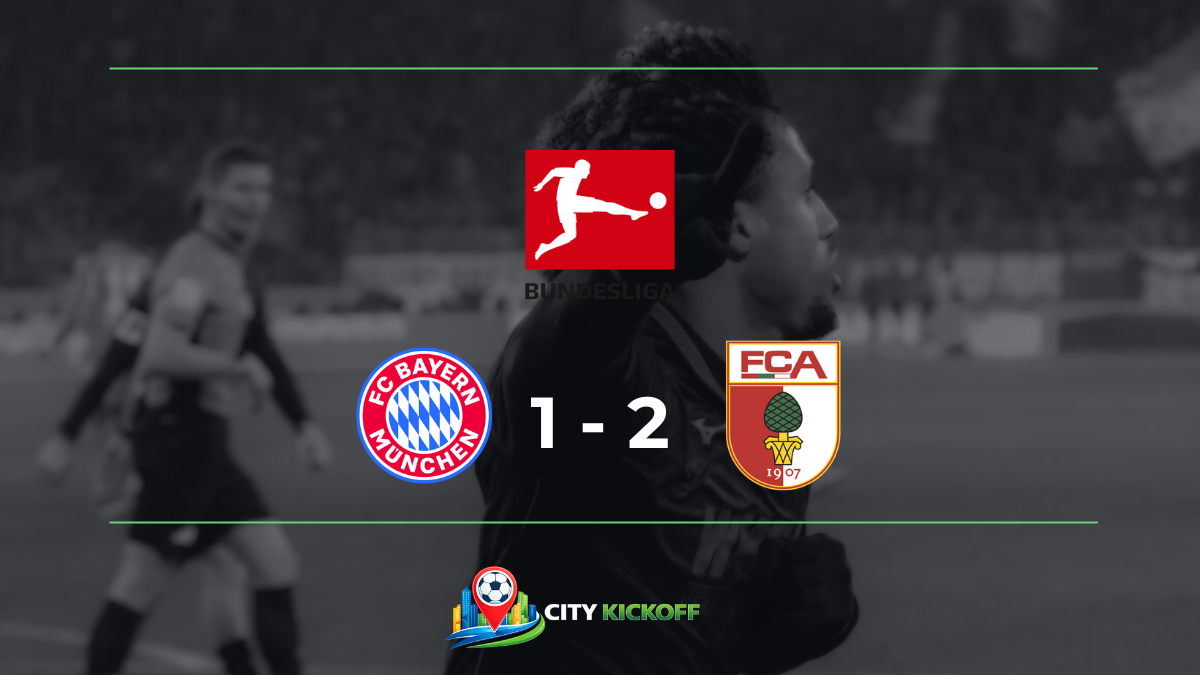
    Perhaps the most startling result of the weekend came in Germany, where Augsburg stunned Bayern Munich 2–1, ending Bayern’s long unbeaten run in the Bundesliga. After an early Bayern goal, Augsburg responded through Arthur Chaves and Han-Noah Massengo to complete the comeback in Munich.

    For Bayern, the defeat highlighted vulnerabilities in breaking down a well-organized block, underlining how physical resistance and opportunistic play can disrupt even the most consistent sides.


    Metz 2–5 Lyon (Ligue 1)

    In Ligue 1 action, Lyon ran out 5–2 winners at Metz, with young Brazilian forward Endrick starring with a hat-trick that punctuated Lyon’s attacking edge. Metz offered spirited resistance early, but Lyon’s incisive movement and efficiency in front of goal tilted the match decisively.

    The result bolsters Lyon’s position in the European qualification race, while Metz will need to regroup defensively and tactically if they are to maintain mid-table stability.


    Weekend in Context

    This weekend’s fixtures carried consequences beyond mere points:

    • United’s win against Arsenal tightens the Premier League title and top-four race, illustrating the importance of tactical adjustment and emotional resilience in high-pressure environments.
    • Real Madrid’s victory on the road reinforces their LaLiga title credentials, especially given the competitive balance near the summit.
    • In Italy, Juventus’s assertive win reshapes the Serie A landscape, as the old guard seeks sustainable consistency amid a congested table.
    • Bayern’s unexpected defeat underscores the unpredictability of the Bundesliga, where compact defensive plans and opportunism can topple favorites.
    • Lyon’s offensive efficiency in Ligue 1 emphasizes the tactical value of high forward mobility and finishing precision.

    Across Europe, this matchday confirmed that January’s action — often overshadowed by winter narratives — remains fundamental to shaping momentum, confidence, and competitive arcs.

  • Bayern Munich vs FC Augsburg: Control Lost and a 2–1 Shock at the Allianz

    Bayern Munich vs FC Augsburg: Control Lost and a 2–1 Shock at the Allianz


    Augsburg stunned Bayern 2–1 at the Allianz. Ito scored first, Chaves equalised, Massengo struck late.

    On January 24, 2026, the Allianz Arena slipped into an unfamiliar quiet. Not the stunned silence of a collapse, but something more unsettling — the moment when a match you believe is under control slowly turns against you. Bayern had territory, rhythm, and the early lead. What they didn’t have, by the end, was the result.

    This was supposed to be routine. Instead, it became a reminder that dominance without decisiveness leaves room for doubt — and doubt invites punishment.

    How the night unfolded

    Bayern’s opener felt like confirmation rather than surprise. Hiroki Ito arrived at the right moment to make it 1–0, the type of goal that usually settles both nerves and narrative. Bayern settled into their familiar shape, pinning Augsburg back, circulating possession, compressing the pitch.

    But the match never tilted fully out of Augsburg’s reach.

    The visitors absorbed pressure with discipline rather than desperation. Bayern saw plenty of the ball — close to 70 percent — yet the game remained strangely unresolved. Chances came, but not in waves. Control existed, but clarity didn’t.

    That uncertainty finally cracked Bayern open late. Arthur Chaves rose to head home the equaliser in the 75th minute, shifting the emotional balance of the stadium in an instant. From there, the game changed texture. Bayern pressed, Augsburg waited — and waited well.

    Then came the moment that froze the night: Han-Noah Massengo, arriving late and untracked, struck the winner in the closing minutes. Augsburg 2, Bayern 1. No chaos. Just precision.

    Tactical truth beneath the result

    Structurally, the match followed expected lines. Bayern operated from a 4-2-3-1, looking to dominate central zones and recycle pressure. Augsburg’s 3-4-2-1 was compact, narrow, and patient, designed to survive first and strike second.

    What made the difference was not shape, but timing.

    Bayern controlled space but never fully removed Augsburg’s belief. The ball moved well, but the final action lacked urgency. Augsburg’s transitions were limited, yet purposeful. When the moment arrived — from a set piece and a late midfield run — they executed without hesitation.

    Statistically, the balance tells the story: shots were nearly even, efforts on target matched. Bayern had corners and territory; Augsburg had conviction when it mattered.

    What the result means right now

    Context matters. Bayern entered the match unbeaten in the league, leaders by habit and by performance. One loss does not destabilise their season. But it does puncture the sense of inevitability that usually surrounds them at home.

    For Augsburg, this was not an accident or a fluke. It was a game managed with patience and belief, won by staying alive long enough for the door to open.

    Bayern didn’t lose because they were overrun. They lost because they never quite finished the argument.

    And in the Bundesliga, when a match is left open, someone else will eventually decide it for you.

  • Can’t-Miss European Matches This Weekend

    Can’t-Miss European Matches This Weekend

    European football is entering a decisive stretch, and the weekend of January 24–25, 2026 brings some of the most attractive fixtures across the top five European leagues: Premier League, LaLiga, Serie A, Bundesliga, and Ligue 1.

    With league tables tightening and pressure increasing, this matchday offers more than entertainment. These games shape momentum, confidence, and belief as the season quietly turns a corner.

    Below, we break down the must-watch European football matches this weekend, with tactical context and narrative importance.


    Arsenal vs Manchester United (Premier League)

    Few Premier League fixtures carry the historical and emotional weight of Arsenal vs Manchester United. This clash arrives at a moment where both clubs are still defining their identity for the season.

    Arsenal will look to impose control through structured possession and positional discipline, while Manchester United’s danger lies in vertical transitions and individual moments. The midfield battle will likely dictate the rhythm, intensity, and emotional flow of the match.

    This is not just a classic rivalry — it is a benchmark for where both sides truly stand.

    Why it matters:

    • Direct impact on the Premier League top-four race
    • Tactical contrast between control and chaos
    • One of the most searched fixtures in English football

    Villarreal vs Real Madrid (LaLiga)

    The LaLiga weekend is headlined by Villarreal vs Real Madrid, a fixture that has consistently tested Madrid’s composure away from home.

    Villarreal’s compact structure and rapid transitions often disrupt visiting giants, while Real Madrid will aim to stretch the pitch and dominate possession. Concentration and defensive balance will be crucial, especially during moments of turnover.

    This match is less about flair and more about discipline.

    Why it matters:

    • Crucial for LaLiga title momentum
    • One of Real Madrid’s toughest away grounds
    • High tactical intensity

    Juventus vs Napoli (Serie A)

    When Juventus face Napoli, Serie A rarely feels more authentic. This is tradition versus ambition, patience versus pace.

    Juventus will seek control, defensive solidity, and game management. Napoli, on the other hand, thrive on tempo, movement, and aggressive transitions. The outcome may hinge on small margins — a lapse in concentration, a single duel, a moment of precision.

    Serie A seasons often pivot on nights like this.

    Why it matters:

    • Direct battle for Champions League places
    • Elite tactical duel
    • High historical and competitive value

    Bayern Munich vs Augsburg (Bundesliga)

    At first glance, Bayern Munich vs Augsburg appears straightforward. Bundesliga matches rarely follow the script.

    Bayern’s challenge will be breaking down a deep, physical block without exposing space in transition. Augsburg’s role is clear: defend with intensity, frustrate, and capitalize on rare openings.

    Matches like this often reveal more about favorites than classics do.

    Why it matters:

    • Bayern’s consistency test
    • Tactical patience vs physical resistance
    • Bundesliga’s unpredictability

    Metz vs Lyon (Ligue 1)

    The Ligue 1 fixture between Metz and Lyon offers quiet tension beneath the surface. Lyon arrive with ambition, but Metz’s home structure and discipline make this a far from routine trip.

    Lyon will look to exploit spaces between the lines, while Metz focus on compactness and disruption. The psychological battle — patience versus frustration — could define the match.

    These are the games that shape league narratives.

    Why it matters:

    • Important for Lyon’s European ambitions
    • Classic Ligue 1 tactical chess match
    • Underrated but competitive fixture

    European Football Weekend Preview: Why This Matchday Matters

    This weekend across Europe’s top leagues is defined not by spectacle alone, but by consequence. These matches won’t decide titles outright, but they influence belief, expose weaknesses, and shift momentum.

    Football’s turning points often arrive quietly — on cold January nights, in tense atmospheres, and through moments that linger longer than the final score.

  • Europa League Matchday 7: Composure in Istanbul, Ruthlessness in Rome, and a Lesson in Braga

    Europa League Matchday 7: Composure in Istanbul, Ruthlessness in Rome, and a Lesson in Braga

    Aston Villa edged Fenerbahçe 0–1, Roma beat Stuttgart 2–0, and Braga punished Forest 1–0 on a decisive Europa League night.


    The UEFA Europa League has a habit of sharpening its edge in January. By Thursday, January 22, 2026, the margin for comfort was gone. Matchday 7 of the league phase felt less like a midweek checkpoint and more like a stress test—of temperament, game management, and clarity under pressure.

    Across Europe, there were no grand statements, only hard-earned ones. In Istanbul, a Premier League side learned how to win without control. In Rome, a young midfielder decided a match that never quite opened up. In Braga, a visiting team unraveled in the space of a minute and paid the price.

    This was a night that rewarded teams who understood what the competition was asking of them.


    Istanbul: Aston Villa’s Quiet Authority

    (Fenerbahçe 0–1 Aston Villa)

    Winning in Istanbul is rarely about aesthetics. The noise presses in, the tempo spikes without warning, and the home side feeds off chaos. Aston Villa knew that and resisted the temptation to impose themselves artificially.

    Against Fenerbahçe, Villa defended in a compact, disciplined block, happy to concede territory as long as they controlled space. The ball circulation was selective, never ambitious for its own sake. When Villa did step out, it was with purpose.

    The goal—scored by Jadon Sancho—didn’t change the plan; it confirmed it. From that moment on, Villa focused on distances between the lines, clearances with intent, and slowing the game whenever Istanbul threatened to accelerate it.

    It was not dominance. It was authority. And in the Europa League, that distinction matters. The 0–1 victory was less about moments of brilliance and more about refusing to lose shape when the match demanded discipline.


    Rome: Timing Over Volume

    (Roma 2–0 Stuttgart)

    At the Stadio Olimpico, the game unfolded in a different register—measured, physical, and often congested. AS Roma did not overwhelm VfB Stuttgart with possession or tempo. Instead, they waited.

    The breakthrough came just before halftime, when Niccolò Pisilli arrived at the right moment in the box, turning a controlled first half into a tangible advantage. His second goal late on sealed the contest and drained the uncertainty from the stadium.

    Roma’s performance was defined by restraint. The midfield protected central lanes, the back line resisted stepping out unnecessarily, and the team trusted that the game would present its openings if they stayed patient.

    Pisilli’s goals mattered not just for their execution, but for when they came. In European competition, timing is often the difference between comfort and chaos.


    Braga: How a Minute Can Undo a Night

    (Braga 1–0 Nottingham Forest)

    If Rome was about patience, Braga was about punishment.

    Sporting Braga didn’t dominate Nottingham Forest, but they never needed to. The match pivoted on a brutal sequence: a missed penalty by Morgan Gibbs-White, followed less than a minute later by an own goal from Ryan Yates.

    From that point, Forest were chasing the game emotionally rather than tactically. Their frustration deepened when Elliot Anderson was sent off late on, effectively ending any realistic comeback.

    Braga’s merit was in their composure. They stayed compact, waited for Forest’s mistakes, and converted them into a lead they were well equipped to defend. In Europe, efficiency often outweighs ambition.


    Other Results That Shaped the Night

    • Rangers 1–0 Ludogorets: A narrow win built on effort and concentration rather than flair, exactly what the moment required.
    • Bologna 2–2 Celtic: A chaotic draw influenced heavily by Reo Hatate’s red card, forcing Celtic into survival mode.
    • PAOK 2–0 Real Betis: A commanding home performance in a stadium that rarely offers mercy to visitors.
    • Freiburg 1–0 Maccabi Tel-Aviv: A late goal turned a tight contest into a vital three points.
    • Brann 3–3 Midtjylland: A wild encounter rescued by a stoppage-time penalty, pure European unpredictability.

    The pattern across Matchday 7 was unmistakable. Teams that understood when not to play won points. Those who chased control without structure were punished.

    As the league phase edges toward its conclusion, the Europa League is no longer about exploration or momentum-building. It is about decision-making under fatigue and pressure. On this night, Aston Villa, Roma, and Braga passed that test in very different ways—but with the same outcome.

    January has stripped the competition to its essentials. And it’s only getting sharper.
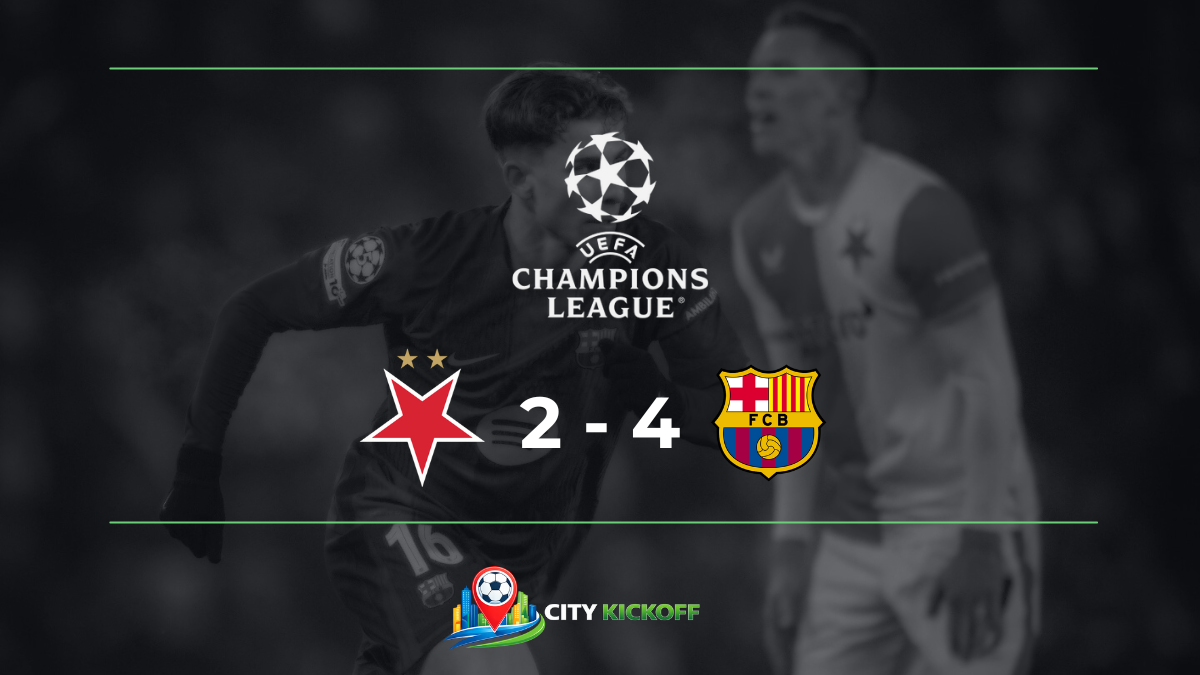
  • Slavia Praha vs Barcelona: Fermín’s Brace, Lewandowski’s Own Goal — and a 4–2 Escape in the Champions League

    Slavia Praha vs Barcelona: Fermín’s Brace, Lewandowski’s Own Goal — and a 4–2 Escape in the Champions League

    Barcelona came from behind to beat Slavia Praha 4–2 with a Fermín López brace and Olmo’s spark.

    Prague in January has a way of stripping football back to essentials: touch, nerve, breath. At Eden Arena on Wednesday night, with the temperature sitting below freezing, Barcelona looked like a side trying to play with gloves on — until the game demanded they take them off.

    They did, eventually, and the scoreline says “2–4” in Barcelona’s favour. But it wasn’t the tidy European away win that a heavyweight imagines when the draw is made. It was messy, cold, and uncomfortable — and that’s precisely why it mattered.

    Barcelona’s league-phase campaign still has edge to it, still needs points and goal difference, and still can’t afford an off-night. In that sense, this was less a performance to admire than a result to bank.

    A night of corners, shoulders, and the one player who kept finding space

    Slavia Praha 2–4 Barcelona
    UEFA Champions League, league phase — Wednesday, January 21, 2026
    Eden Arena (Prague)

    Slavia struck first, and they did it the way underdogs dream of doing it: by making a set-piece feel like a rehearsed ambush. A corner was worked across the box, Tomáš Holeš flicked it on, and Vasil Kušej forced it over the line with bodies converging at the far post. 1–0 after 10 minutes, and suddenly Barcelona had to play the match Slavia wanted.

    Barcelona’s response, crucially, came from a midfielder arriving like a forward. Fermín López has that instinct — the knack of appearing where the pitch is briefly empty. His equaliser on 34 minutes was a sharp finish from inside the area, squeezed in at the near post, and it steadied Barcelona’s pulse. Eight minutes later, he did it again: this time from the edge of the box, picked out with precision into the bottom corner. In a half where Barcelona oscillated between control and vulnerability, López was the one constant.

    And yet, they still went in level — because the same weakness that had opened the match came back to bite them. Under pressure defending another corner, Robert Lewandowski glanced the ball into his own net. Barcelona had turned the game, then handed it back.

    Why Barcelona’s second half felt different

    At 2–2, this had the shape of a night that can rot on you: frozen ground, a crowd sensing history, a favourite with one eye on bigger stages. But Barcelona’s second half was more purposeful — not just more possession, but more intent with it.

    They pressed Slavia deeper, recycled the ball faster, and started to force second balls around the box. The chances came — and were missed — until the key swing arrived from the bench. Dani Olmo, introduced after Pedri was forced off with a muscular injury, changed the temperature of the match with one strike: a fierce effort from the edge of the box into the top corner on 64 minutes. It was the kind of goal that quiets a stadium not through silence, but through acceptance.

    From there, Barcelona finally played like a team that understood the stakes. Lewandowski, who had lived a full storyline already — scorer at the wrong end, then redeemer-in-waiting — finished the job on 70 minutes. Marcus Rashford, another second-half substitute, tore down the left and delivered into the area; Lewandowski reacted quickest to poke it past Jindřich Staněk and put the night out of Slavia’s reach.

    What the result means right now

    Barcelona left Prague with three points and a 4–2 win that keeps them in the traffic jam around the automatic qualification places. The result lifted them to ninth in the league-phase standings on 13 points with one game remaining, part of a crowded chase for the top eight. Slavia, meanwhile, stayed near the bottom with just three points.

    If you’re looking for a neat moral, it’s this: Barcelona can still overwhelm teams when they accelerate, but they are not currently built to sleepwalk through awkward nights. In Prague, the set-piece concessions and the self-inflicted equaliser were warning flares. The second-half control, the bench impact, and Fermín López’s decisiveness were the antidote.

    The best Champions League sides don’t just win when it’s comfortable — they win when the air hurts your hands and the match keeps asking you questions. Barcelona didn’t answer all of them at Eden Arena. But they answered the one that mattered most.

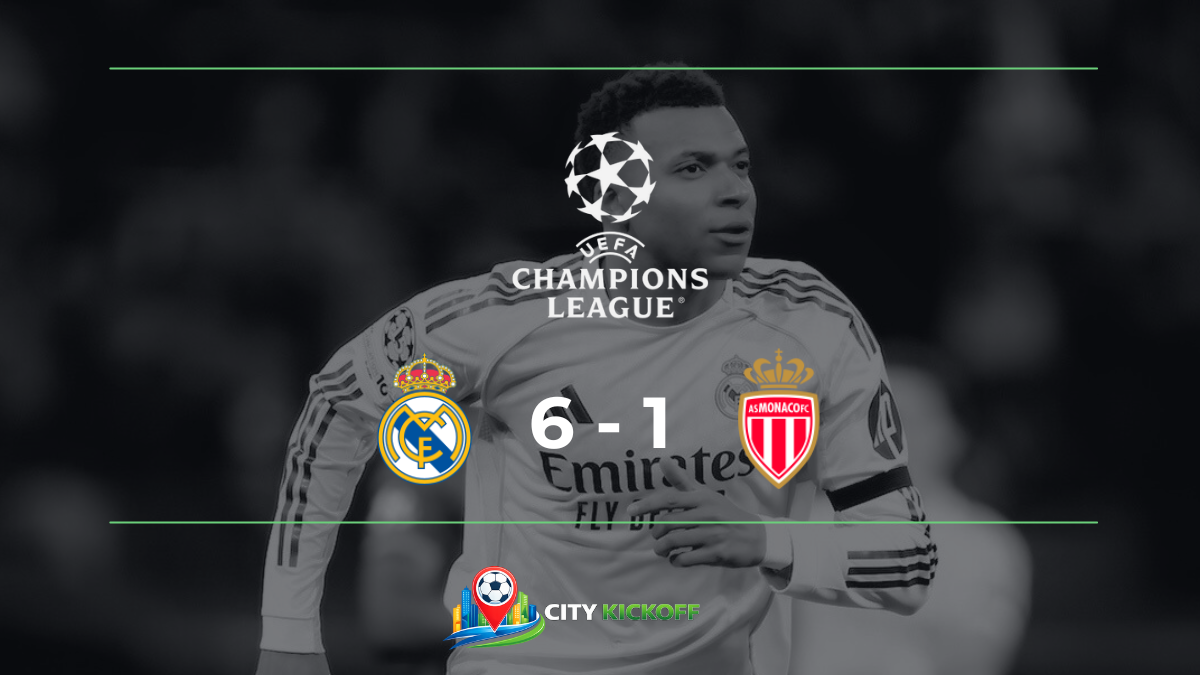
  • Real Madrid vs Monaco: Bernabéu Blitz in a 6–1 Champions League Statement

    Real Madrid vs Monaco: Bernabéu Blitz in a 6–1 Champions League Statement

    Real Madrid thrashed Monaco 6–1 UEFA Champions League at the Bernabéu, with Mbappé and Vinícius starring.

    The Santiago Bernabéu was awash in white again on the night of 20 January 2026, but this night felt different — not just another routine European Tuesday, but a release valve for a club under pressure. Real Madrid’s 6–1 obliteration of Monaco was raw, emphatic and uneven in its beauty, a performance that read like a collective exhale after a tense patch of football that had seen Galácticos and critics at each other’s throats.

    From the first whistle, Madrid played with the sort of fluid, attacking confidence that had been intermittently missing this season. Monaco arrived with ambition and tactical intent, but were swiftly overwhelmed by the champions’ momentum and positional superiority. By night’s end, Real Madrid’s dismantling of the visitors was less a surprise result than a statement of purpose.

    A Match That Mattered

    This wasn’t just another group stage fixture; it was a chance for Real to steady themselves in a campaign marked by managerial change, domestic stumbles and a Bernabéu crowd that has quickly become demanding. The result sends a clear message — they are still a European force, capable of tearing teams apart in waves.

    Monaco, for their part, arrived with a tactical shape designed to suffocate space between the lines and force Madrid wide. Early on, though, they were punished for it.

    Quickfire Openers Set the Tone

    Real Madrid’s tempo from minute one was striking — aggressive in transition and ruthless in execution. Kylian Mbappé, facing his former club, embodied that edge. He struck twice inside the first half-hour, first with a cool finish from the edge of the area and then with another clinical move, pinning Monaco back and electrifying the home crowd.

    Those early goals weren’t flukes — they were products of intense attacking phases that exploited Monaco’s high defensive line and invited pressure. Madrid’s combination of verticality through Mbappé, and creative overload down the right through Vinícius Jr., had defenders scrambling before the game had truly settled.

    Control, Creativity, and a Cascade of Goals

    The second half unfolded as a testament to Madrid’s level of control. Franco Mastantuono added a third right after the break with a finish that was both balanced and composed. Moments later, an own goal from Thilo Kehrer — unfortunate but telling of the pressure — made it 4–0.

    Vinícius, who entered the night under a cloud of spectator discontent, became the defining figure of the evening. His third goal — a solo strike that threaded through a crowded defence — and three assists, had a Bernabéu crowd turning fervent supporters as the game progressed.

    Monaco’s Jordan Teze managed a consolatory strike midway through the second period, a reminder that even in collapse there is competitive spirit. But Jude Bellingham’s composed finish late on sealed the emphatic margin, capping a display that felt as comprehensive as it was cathartic.

    Tactical Reflection

    Tactically, Real Madrid struck a rare balance: vertical threat without losing shape. Their pressing moments were timely, often forcing Monaco into hurried build-ups that Madrid exploited immediately. The interplay between central midfield and the wide forwards showed a clarity that had occasionally been missing this season.

    Monaco’s approach, bold in outline but brittle in execution, struggled to sustain any rhythm once Madrid scored. Their midfield, expected to act as a buffer, was consistently bypassed. The result was a night where weaknesses were magnified by Madrid’s ruthless efficiency.

    What This Result Means Now

    For Real Madrid, this victory boosts their position in the group and restores a bit of European swagger. It is a reminder that, when in sync, their attack can still operate at an elite level. Monaco, meanwhile, must regroup; this loss leaves their qualification hopes hanging by fine margins and underlines the gulf that can exist in a competition where a single night can decide narratives.

    There was rhythm in every pass, intent in every run, and when the echo of 6–1 settled over the Bernabéu, a clear truth remained: Real Madrid can still carve through Europe with devastating effect — especially when their brightest stars find form on the biggest nights.

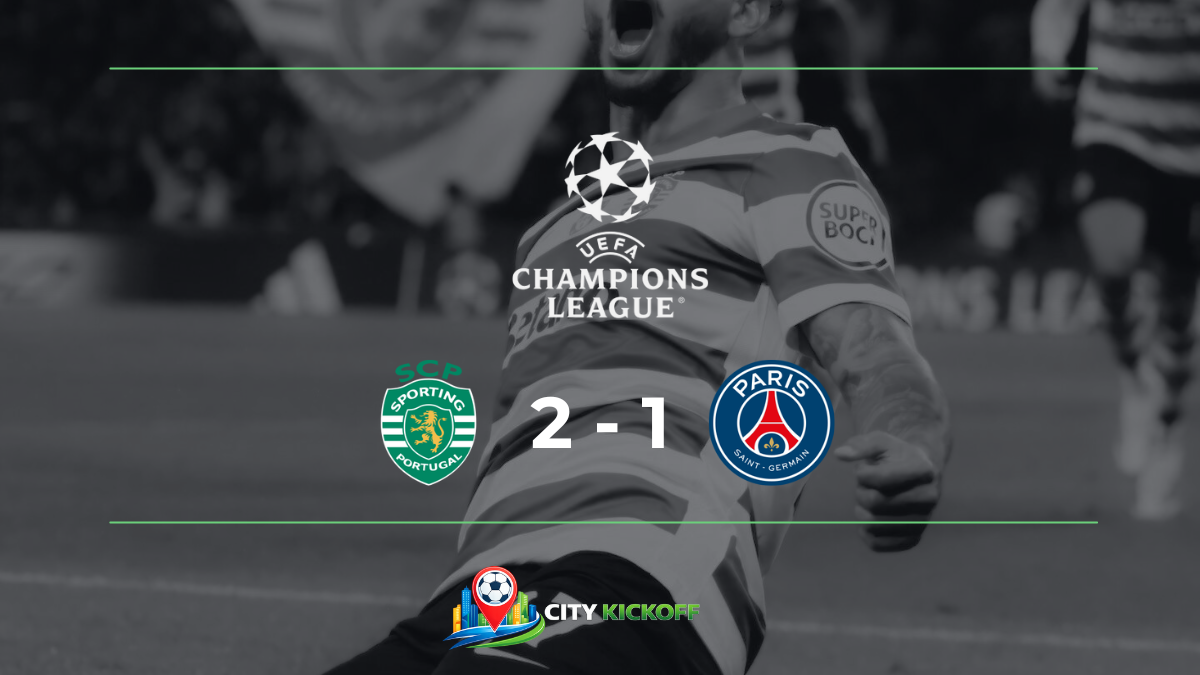
  • Sporting CP vs Paris Saint-Germain: Suarez Strikes Late as Lions Roar to a 2-1 Champions League Triumph

    Sporting CP vs Paris Saint-Germain: Suarez Strikes Late as Lions Roar to a 2-1 Champions League Triumph

    Sporting CP stunned holders PSG 2-1 in the UEFA Champions League as Luis Suárez’s late double sealed a seismic win in Lisbon.

    It was the sort of night Lisbon savoured long before the final whistle — the Estádio José Alvalade simmering in the cold January air, aware this was no ordinary midweek fixture. Sporting CP, fighting for their Champions League lives, hosted Paris Saint-Germain, the reigning holders, in a Round 7 clash that felt decisive for both teams’ paths through Europe.

    By the time the game sparked to life in the second half, however, it was clear this would be defined not by the French visitors’ pedigree but by Sporting’s appetite and urgency. And when Luis Suárez’s header rippled the net deep into stoppage time, the narrative crystallised: this was Sporting’s night.

    There was an edge of improbability to it — PSG came to Lisbon with their stars, their rhythm and their pressing ambition intact. Sporting, driven by necessity and atmosphere, produced the sort of performance that will echo in club lore this season.

    A Game of Two Halves, a Season-Defining Finish

    The opening 45 minutes felt like a lesson in initiative versus intent. PSG controlled the ball, pushed forward with authority and fashioned the clearer openings. Chances flowed through Vitinha and the ever-threatening Nuno Mendes only for Rui Silva to stand tall, denying PSG an early goal. Moments that should have yielded breakthroughs didn’t — and the first half closed goalless, PSG dominant in possession but without a telling edge.

    Sporting’s reaction after the break was more visceral than tactical at first — urgency amplified by the home crowd, energy in every duel. And when Georgios Vagiannidis’ corner found Suárez at the near post in the 74th minute, Sporting had their lead. It wasn’t pretty; it was gritty, precise and perfectly timed.

    PSG responded with quality. Substitute Khvicha Kvaratskhelia twisted space, found daylight and slotted home to level seven minutes later, nudging the visitors back into contention. But these were moments of fine margins, and in European football such moments often decide nights.

    Suárez: The Unlikely Hero

    Luis Suárez, entering this match without the spotlight that usually accompanies his name, ended up consuming it. His second — a towering header deep into added time — wasn’t just a goal; it was a statement. An assertion of intent from a club chasing momentum, and a dagger to PSG’s hopes of direct qualification for the knockout phase.

    There was something almost symbolic in the manner of the goal: Sporting, enduring in the trenches of midfield and defence, winning the battles that mattered, and then rising above to seize glory when it counted most. Suárez’s brace was less about individual brilliance and more about collective persistence finding its embodiment in one decisive moment.

    Tactical Tensions and Turning Points

    What distinguished Sporting’s performance wasn’t raw invention but structural resolve. Against a PSG side content to circulate possession and probe patiently, Sporting pressed with intent after the break, especially in zones that mattered — wide channels in transition became crucibles for danger. PSG’s high line, usually an asset, was exposed on more than one occasion once Sporting eased into their rhythm.

    For PSG, dominance didn’t translate into control. Two goals were disallowed earlier in the match, moments that might have rewritten the script but instead left Les Parisiens chasing the narrative — and ultimately the result.

    What It Means Now

    This result is a jolt in the context of the Champions League group phase. Sporting’s tally of points — now level with PSG — reshapes the battle for qualification places, tightening a section where direct passage to the knockout rounds was starting to feel increasingly crucial for both sides. PSG, champions last season, must now re-assess momentum; Sporting, by contrast, are buoyed and alive.

    For Sporting, this isn’t merely three points. It’s a turning point — affirmation that intensity, focus and belief can subvert reputation on Europe’s biggest nights. For PSG, it’s a reminder that possession alone won’t deliver the outcomes this stage demands.

    As the Lisbon floodlights dimmed, Suárez’s late touch of fortune summed up the broader truth of this campaign: in the Champions League, merit is won in the last minute as often as the first. The implications will unfold in the weeks ahead, but on this night Sporting CP wrote their own chapter.

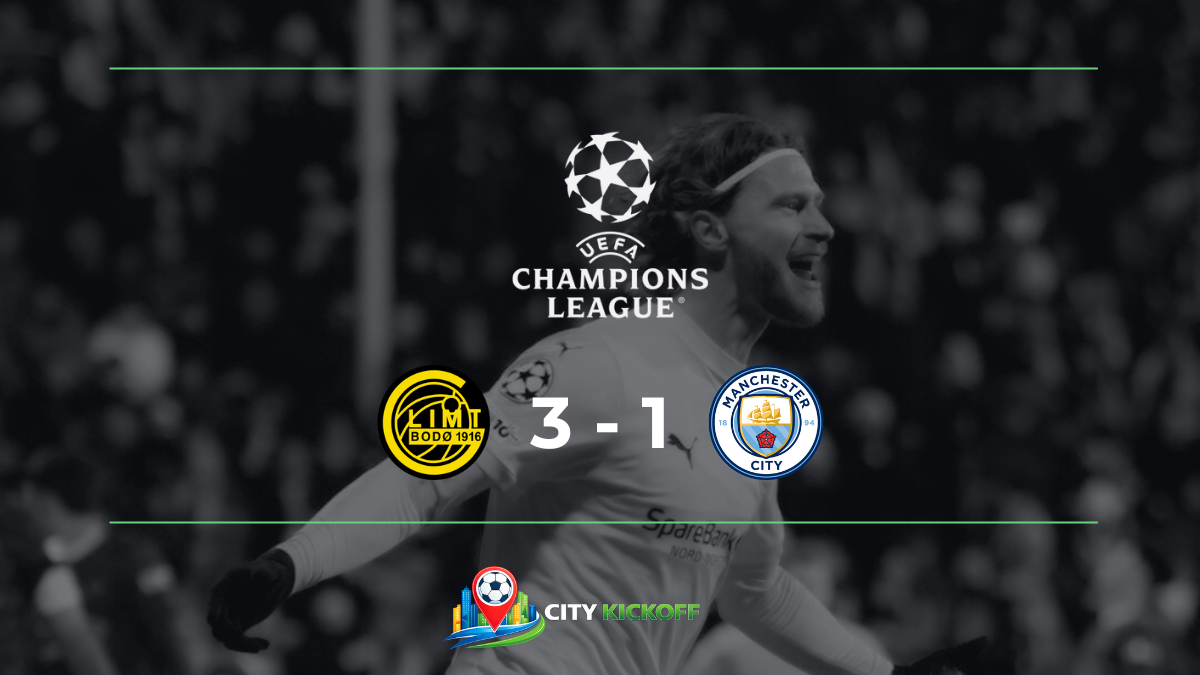
  • Bodø/Glimt vs Manchester City: Champions League Shock in Norway as City Fall 3–1

    Bodø/Glimt vs Manchester City: Champions League Shock in Norway as City Fall 3–1

    The Arctic wind howled around Aspmyra Stadion late into the night of January 20, 2026, but nothing matched the cold reality sinking into Pep Guardiola’s Manchester City. What promised to be a routine group-stage finale for the defending European champions dissolved into one of the competition’s most startling upsets in memory: a 3–1 defeat at the hands of Bodø/Glimt.

    City arrived as heavy favourites, their continental pedigree dwarfing that of the Norwegian minnows. Yet this was not a grinding attritional loss — it was a tactical dismantling, sparked by intent, execution, and a red card that shifted the game’s balance irreversibly.

    From the outset, Bodø/Glimt’s plan was obvious and brilliantly simple: absorb early pressure, strike with precision on the counter, and make the artificial turf and Arctic conditions an asset rather than an obstacle. Within the first 25 minutes they had done precisely that.

    Kasper Høgh, a striker more used to making noise in Scandinavia than silencing European royalty, emerged as the early protagonist. Two goals in quick succession — at 22 and 24 minutes — were textbook counterattacks: vertical transitions that pulled City’s midfield out of shape and exposed inexperienced central defenders to Bodø’s pace.

    City’s response was uncharacteristically flat. They dominated possession but lacked penetration, a theme that has crept into performances this season. Erling Haaland, often the focal point of City’s attacking rhythm, was peripheral; the ball never seemed to stick long enough in dangerous areas for him to assert himself consistently.

    In the second half, Jens Petter Hauge’s finish extended the lead to 3–0 — a scoreline that, if honest to the chances and transitions of the first hour, felt deserved. When Rayan Cherki finally pulled one back with a well-struck attempt from outside the area, City briefly stirred.

    But the moment that truly defined the night came not on the scoresheet but in the disciplinary book. Rodri, usually the metronomic anchor in midfield, was dismissed after receiving two yellow cards within 60 seconds — a reckless pair of challenges that not only reduced City to ten men but also drained whatever tactical confidence Guardiola’s side still retained.

    From there, City’s shape dissolved. As the visitors pushed numbers forward trying to swing the momentum back, gaps appeared that Bodø/Glimt exploited with clinical discipline. The Norwegian side, now with real belief and a lead to protect, shifted between compact defending and rapid transition with a tactical clarity rarely seen from underdogs at this level.

    Looking at the broader competition context, the loss is more than a single blemish — it jeopardises City’s pursuit of a top-eight spot in the league phase. With one group game remaining against Galatasaray at the Etihad, this result means there is no margin for error. A win is imperative if they are to avoid the playoff round or worse.

    For Bodø/Glimt, the victory is seismic. Not just because it’s their first in the Champions League, but because it was earned through tactical intelligence and spirited execution against one of Europe’s technical elites. Nights like this are the heartbeat of the competition — where strategy, spirit, and circumstance collide to rewrite expectations.

    City will return to Manchester to nurse bruised egos and recalibrate. But for one freezing night above the Arctic Circle, Bodø/Glimt wrote themselves into European folklore with a performance that was as inspiring as it was destructive to their illustrious opponents.